
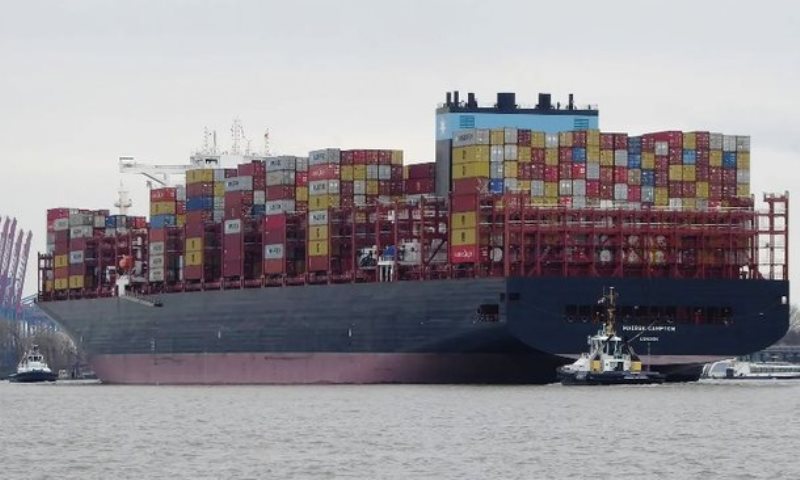
According to data from Container Trades Statistics (CTS), the Far East–Middle East and Indian subcontinent trade corridor has recorded the highest freight rate growth among major container shipping routes this year.
The CTS price index for shipments from Greater China to the Middle East reached 392 in September, representing a 250% increase since the beginning of 2026. Rates also climbed 15.5% month-on-month, despite year-to-date cargo volumes remaining 12% lower.
The sharp increase follows a rebound in cargo volumes during September, as importers accelerated shipments to Gulf markets amid continuing disruptions linked to the Strait of Hormuz and the wider regional conflict.
According to the Shanghai Containerised Freight Index (SCFI), spot freight rates on the Shanghai–Dubai route reached around US$6,500 per 40-foot container, remaining at that level throughout October. This is nearly 300% higher than the US$1,630 recorded at the end of October 2025.
Port Congestion Intensifies
The surge in cargo movement has intensified congestion at key alternative gateways outside the Strait of Hormuz, particularly Fujairah and Khor Fakkan, which have become important entry points for cargo destined for Gulf Cooperation Council (GCC) markets.
Shipping lines are increasingly facing berthing delays and operational constraints at these ports. According to shipping analyst Linerlytica, congestion at Middle East ports has reached a record high.
Some carriers have reportedly suspended bookings to Khor Fakkan and Fujairah temporarily to manage mounting congestion and operational backlogs.
The congestion is also prompting shipping lines to reconsider their service networks. MSC has introduced a call at Khor Fakkan on a new Far East–Middle East service deploying vessels of up to 24,000 TEU, despite significant berthing delays.
Shipping Lines Explore Alternative Gateways
With congestion and disruption affecting traditional Gulf shipping routes, carriers are increasingly exploring alternative gateways and inland transportation options.
Maersk has reported increased use of Saudi Arabia’s Red Sea port of Jeddah, with customers turning to the Saudi Landbridge to move cargo towards Gulf destinations.
The company said demand for alternative routing options increased during October as shippers sought to reduce exposure to disruptions affecting port and shipping connections around the Strait of Hormuz. The trend is expected to continue into November.
Outlook
The combination of strong import demand, limited vessel availability, port congestion and uncertainty surrounding regional shipping operations is continuing to put upward pressure on freight rates.
For exporters and importers trading between Asia, India and the Middle East, the evolving situation is likely to mean higher transportation costs, longer transit times and greater uncertainty in shipment planning.
Shipping lines are expected to continue adjusting their service networks and routing strategies as congestion at alternative Gulf gateways remains a major operational challenge.