
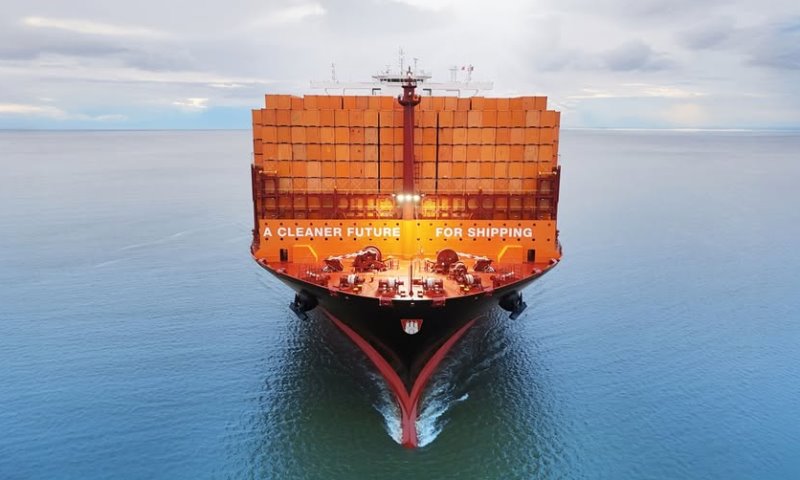
Hapag-Lloyd’s additional Asia–East Coast South America service is expected to reverse a temporary capacity squeeze in December, bringing around 10,000 TEU of additional weekly capacity to the trade from April 2027.
Global container shipping capacity on the Asia–East Coast South America (ECSA) route is set to tighten in December 2026 following the withdrawal of the Maersk–CMA CGM ASAS2 service. The move is expected to reduce nominal weekly capacity on the trade by approximately 6%.
However, the capacity pressure is likely to be temporary, with Hapag-Lloyd planning to introduce its new ASX service in April 2027, adding significant capacity and expanding connectivity between Asia and key Brazilian ports.
The ASX service is designed to operate alongside Hapag-Lloyd’s existing AS3 service rather than replace it. Together, the two services will provide two weekly sailings connecting the same four Brazilian gateways, supported by cargo flows from different Chinese port catchments.
The ASX service will cover Qingdao, Ningbo, Shekou, Tanjung Pelepas, Santos, Itajaí, Rio Grande, Paranaguá, Santos and Singapore.
An important feature of the new rotation is its use of Malaysia’s Port of Tanjung Pelepas as a westbound cargo consolidation point instead of Singapore, potentially strengthening its integration with the Gemini network operated by Hapag-Lloyd and Maersk.
Hapag-Lloyd also maintains access to the trade through slots purchased on Maersk’s ASAS service, which offers direct calls at Buenos Aires and Montevideo, further extending its coverage of the South American market.
The capacity outlook will change significantly in April 2027, when MSC is expected to replace Hapag-Lloyd’s five vessels on the Ipanema service with its own ships, while Hapag-Lloyd introduces an additional service loop. The new loop could contribute approximately 10,000 TEU of weekly capacity, sufficient to offset the capacity reduction anticipated in December.
By the second quarter of 2027, the Asia–ECSA trade is expected to become more competitive, with at least four major carrier groupings controlling their own vessel capacity: the Ocean Alliance, MSC and ONE, Maersk, and Hapag-Lloyd, potentially with or without ZIM.
The anticipated expansion is significant for exporters, importers and freight forwarders moving cargo between Asia and South America. Industry participants negotiating annual freight contracts during the winter capacity squeeze have been advised not to assume that December’s tighter market conditions will continue throughout 2027.
The planned capacity additions and changing carrier arrangements could provide shippers with more service options and greater bargaining flexibility from the second quarter of 2027, although geopolitical developments and potential disruptions remain important uncertainties.