
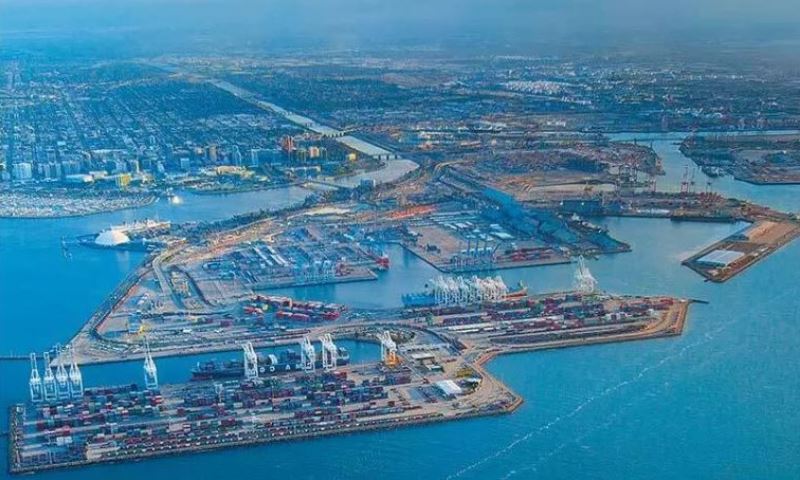
The Port of Long Beach in California has achieved its lowest-ever emissions per container, marking significant progress in reducing the environmental impact of port operations while handling record cargo volumes.
According to the port’s 2025 emissions inventory, greenhouse gas emissions per container reached a historic low even as annual throughput climbed to nearly 9.9 million twenty-foot equivalent units (TEUs), setting a new cargo-handling record.
The port also recorded a 6% year-on-year reduction in overall greenhouse gas emissions, demonstrating progress in improving environmental performance alongside growing trade activity.
The achievement reflects the port’s continuing efforts to reduce emissions from ships, cargo-handling equipment, trucks and other activities associated with container transportation. Measures supporting this transition include cleaner equipment, improved operational efficiency and the gradual adoption of zero-emission technologies.
Reducing emissions per container is an important indicator of environmental performance because it measures the pollution intensity of cargo movement rather than total emissions alone. The latest results suggest that the port has been able to accommodate higher cargo volumes while lowering the emissions associated with each container handled.
The Port of Long Beach has been pursuing a long-term clean-air strategy in coordination with shipping lines, terminal operators, trucking companies and other supply-chain partners. Its initiatives include expanding the use of cleaner cargo-handling equipment, supporting cleaner drayage operations and encouraging vessels to reduce emissions while at berth.
The latest figures reinforce the port’s efforts to balance its role as a major international trade gateway with its environmental commitments.
As global ports face increasing pressure to decarbonise maritime supply chains, Long Beach’s performance highlights the importance of combining infrastructure investment, cleaner technologies and operational improvements to reduce the environmental footprint of growing container traffic.