
India targets a place among the world’s top 10 shipbuilding nations by 2030, with plans to develop five greenfield shipbuilding clusters
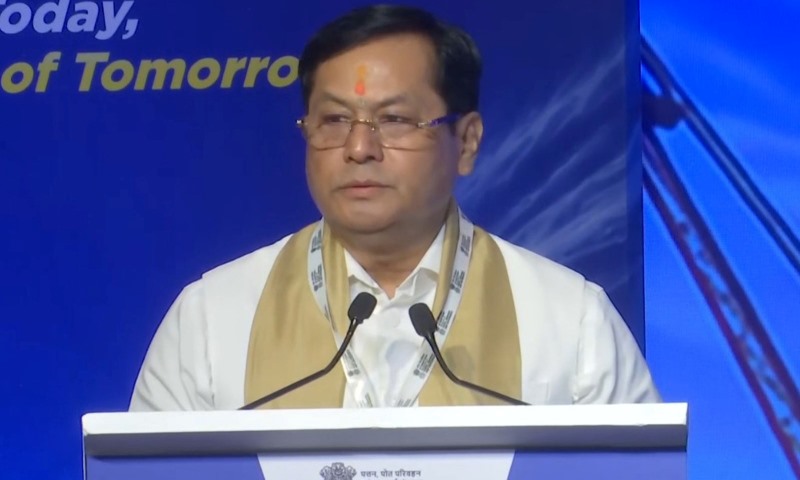
India’s shipbuilding sector is witnessing growing international interest, with the country’s active shipbuilding order pipeline comprising more than 150 vessels valued at over USD 1.7 billion, of which export orders account for more than 80 per cent of the total value, Union Minister for Ports, Shipping and Waterways Sarbananda Sonowal said on Monday.
Addressing the India Shipbuilding Investment Conclave 2026 in New Delhi, the Minister said the growing participation of international shipping companies and investors reflects increasing global confidence in India’s shipbuilding capabilities, engineering expertise and long-term maritime potential.
“Global confidence in India is already growing. Our active order pipeline comprises more than 150 vessels valued at over 1.7 billion US dollars. More than 80 per cent of this value comes from export orders,” Sonowal said.
Highlighting India’s expanding presence in the global shipbuilding market, he cited orders placed by international shipping major CMA CGM for emerging-fuel and dual-fuel LNG vessels with Indian shipyards as evidence of growing confidence in the country’s engineering capabilities.
He also pointed to South Korean shipbuilding major KSOE’s interest in developing a mega greenfield shipyard at Tuticorin, describing it as a strong indication of international confidence in India’s long-term maritime opportunities.
Sonowal further said that existing Indian shipyards are investing more than USD 1 billion in capacity expansion, reflecting the industry’s growing momentum and readiness to capitalise on emerging opportunities.
However, he emphasised that the next major challenge for the sector would be to translate international interest and investment commitments into consistent performance by delivering vessels that meet global quality standards within committed timelines.
India Targets Global Shipbuilding Leadership
India has set an ambitious target of becoming one of the world’s top 10 shipbuilding nations by 2030 and advancing into the top five by 2047. The government is also targeting the development of an annual shipbuilding capacity of approximately 4.5 million gross tonnes.
To achieve these objectives, the Centre is working with the governments of Andhra Pradesh, Gujarat, Maharashtra, Odisha and Tamil Nadu to establish five greenfield shipbuilding clusters.
The proposed clusters will be developed through dedicated Special Purpose Vehicles (SPVs), backed by central and state government incentives. The investment framework is expected to provide investors with ready-to-use land on long-term leases, common marine infrastructure, connectivity, utilities and a predictable institutional framework.
According to Sonowal, this coordinated development model will help reduce investment risks, improve project execution and shorten the time between investment decisions and the commencement of commercial production.
Call for Global Partnerships and Local Supply Chains
Inviting greater participation from international players, the Minister urged global shipbuilders to partner with the proposed cluster SPVs and contribute to the development of next-generation shipbuilding facilities in India.
He also called upon marine equipment manufacturers to establish manufacturing operations in the country, strengthen domestic supply chains and leverage India as a production base for global exports.
Sonowal said the India Shipbuilding Investment Conclave 2026 was aimed at translating discussions and expressions of interest into concrete investment decisions.
As part of the conclave, international participants are scheduled to visit proposed shipbuilding locations to assess infrastructure availability, connectivity and overall investment potential.
With a growing export order book, substantial investments in existing shipyards and plans for five greenfield clusters, India is positioning itself to emerge as a competitive global shipbuilding hub while strengthening its maritime manufacturing ecosystem.