
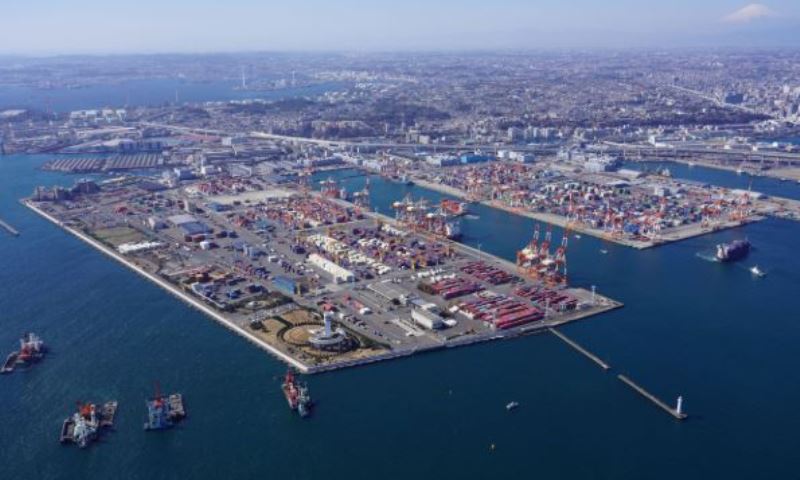
The Port of Yokohama handled 261,817 TEUs of export and import containers in July 2026, registering a 14.4% year-on-year increase, supported by strong growth in both inbound and outbound cargo movements, according to preliminary statistics released by the Yokohama City Port and Harbor Bureau.
Imports recorded the stronger growth, rising 17.4% to 121,929 TEUs compared with the same month last year. Export container volumes increased 11.9% to 139,888 TEUs, reflecting higher cargo movement through one of Japan’s major international trade gateways.
Including domestic containers, the port’s total throughput reached 292,393 TEUs in July, representing an 11.2% increase year-on-year. Domestic container volumes, however, declined 10.4% to 30,576 TEUs.
The July performance highlights the continued strength of international container traffic at Yokohama, with both export and import volumes recording double-digit growth. Imports outpaced exports in percentage terms, while exports maintained a higher absolute volume during the month.
Cumulative volumes remain positive
During the first seven months of 2026, Yokohama handled approximately 1.69 million TEUs of international export and import containers, up 6.3% compared with the corresponding period last year.
Exports accounted for 889,766 TEUs, registering growth of 2.9%, while imports increased 10.4% to 798,629 TEUs.
Domestic container traffic reached 211,835 TEUs during January–July, marking a 1.1% increase year-on-year. Including domestic movements, the port’s cumulative container throughput totalled approximately 1.9 million TEUs, up 5.7%.
The stronger growth in imports compared with exports indicates an improvement in inbound container activity at the port during the period.
Yokohama is one of Japan’s principal international container ports, handling a wide range of industrial goods, machinery, consumer products and other cargoes. Its port facilities play an important role in connecting Japanese businesses with global shipping networks.
The latest figures underline the positive momentum in the port’s container business during 2026, with international cargo movements continuing to support overall throughput growth.