
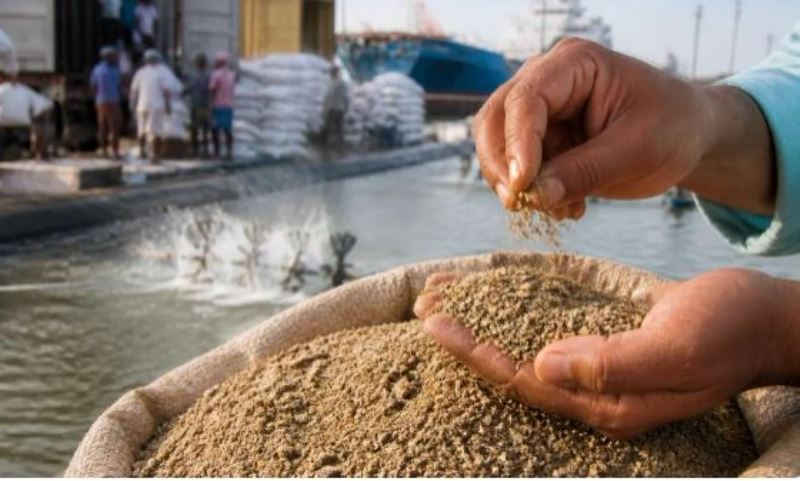
India’s rapidly growing fishmeal exports are raising concerns over the availability of raw materials for the country’s domestic aquaculture industry, prompting the Seafood Exporters Association of India (SEAI) to seek restrictions on overseas shipments.
According to industry data, India’s fishmeal exports increased significantly from 224,289 tonnes, valued at US$269.4 million, in FY2024-25 to 392,538 tonnes worth US$507.73 million in FY2025-26.
The upward trend has continued in the current financial year. Between April and August 2026, exports reached 181,594 tonnes valued at US$387.73 million, compared with 119,378 tonnes worth US$124.47 million during the corresponding period last year.
The surge is largely attributed to a global shortage of fishmeal following supply restrictions by Peru, the world’s largest producer. Concerns over declining fish stocks and the impact of El Niño have affected supplies from the South American country, pushing international prices higher and encouraging Indian manufacturers to increase exports.
SEAI has proposed introducing a temporary cap on fishmeal export volumes, with quotas allocated to exporters based on their actual export performance over the previous three years. The association believes such a measure would help maintain a balance between export opportunities and the requirements of domestic aquaculture and shrimp farming.
SEAI Secretary General K N Raghavan estimated India’s annual fishmeal production at approximately 550,000 tonnes. If the current export trend continues, shipments could approach 450,000 tonnes during FY2026-27, potentially leaving inadequate supplies for domestic feed manufacturers.
The shortage could further increase aquaculture feed costs, adding pressure on shrimp farmers already facing rising production expenses. Higher input costs could also affect India’s seafood export competitiveness, particularly its shrimp export industry, valued at approximately US$5.62 billion.
Another major concern is the increasing use of juvenile fish in fishmeal production. Traditionally, the industry relied largely on fish-processing waste, bycatch and low-value fish. However, reports of increased harvesting of immature fish along India’s western coast have raised concerns about marine resource depletion and the long-term sustainability of fisheries.
Industry representatives have warned that excessive harvesting of juvenile fish could damage marine ecosystems and threaten the livelihoods of fishing communities. They have also cautioned that unsustainable fishing practices could affect India’s seafood exports to markets such as the United States, European Union, Japan and the United Kingdom, where environmental sustainability and traceability requirements are increasingly stringent.
With the aquaculture sector depending heavily on fishmeal for animal feed, industry stakeholders are urging the government to review export policies, strengthen monitoring of raw material procurement and ensure adequate domestic availability.
The industry believes that balancing fishmeal exports with domestic demand and sustainable fishing practices is essential to protecting India’s aquaculture sector, marine resources and long-term seafood export growth.