
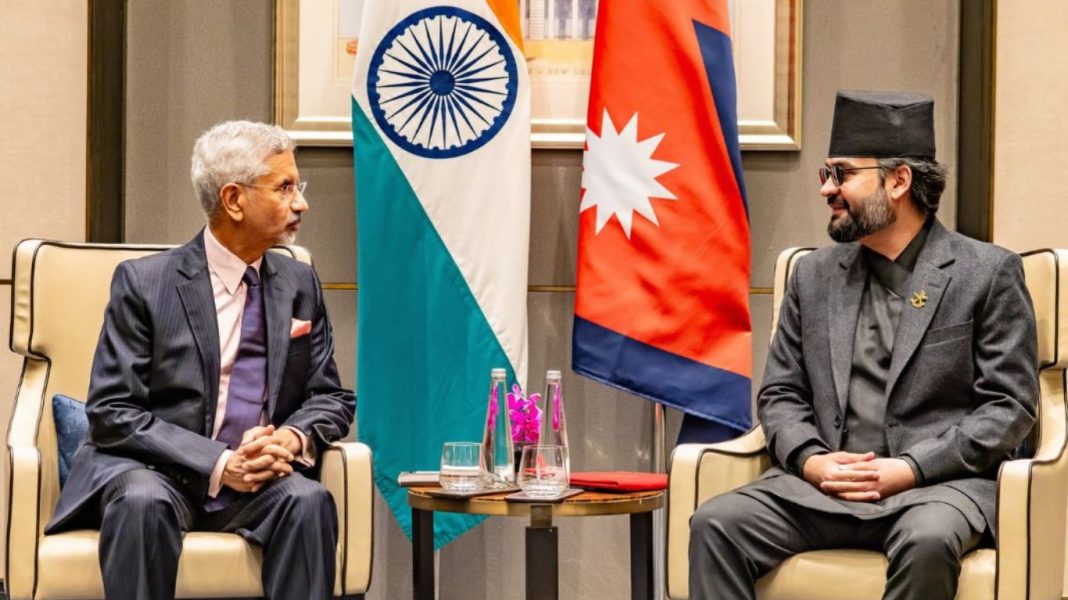
India and Nepal are looking to strengthen bilateral trade, transport connectivity and energy cooperation, with cross-border railway infrastructure and transit arrangements emerging as key areas of focus during Nepal Prime Minister Balendra Shah’s two-day state visit to New Delhi on 22–23 November 2026.
Shah’s visit, his first bilateral foreign visit since assuming office, has renewed attention on improving Nepal’s access to Indian ports and international shipping networks through enhanced rail, road and transit connectivity.
During the visit, Shah met India’s External Affairs Minister S. Jaishankar on 22 November. Discussions covered connectivity, trade, transit, commerce and energy, besides education, culture and people-to-people exchanges. Nepal Finance Minister Swarnim Wagle also participated in a Nepal-India Business Roundtable with Indian business leaders and investors to explore investment opportunities and economic cooperation.
Proposed Railway Links Could Boost Connectivity
The proposed Raxaul-Kathmandu railway remains an important component of the India-Nepal connectivity agenda. The project, if implemented, could facilitate passenger and freight movement between the two countries, strengthening Nepal’s integration with India’s wider transport and logistics network.
However, the discussions have not yet resulted in any confirmed construction award, financing agreement or project completion timeline.
A proposed passenger rail connection between Ayodhya and Janakpur Dham was also expected to feature in the visit. The initiative is primarily aimed at improving passenger and pilgrimage connectivity, while the Raxaul-Kathmandu link carries wider commercial and potential freight significance.
India and Nepal had outlined plans to expand railway connectivity between Raxaul and Kathmandu in a joint statement issued in April 2018, alongside cooperation in inland waterways.
Indian Ports Remain Vital to Nepal’s Global Trade
As a landlocked country, Nepal depends heavily on Indian transport infrastructure and seaports for access to international maritime trade routes. Kolkata, Haldia and Visakhapatnam are among the key gateways handling Nepal’s third-country trade.
The February 2016 agreement allowing Nepalese transit cargo through Visakhapatnam, including connectivity with the Inland Container Depot at Birgunj, expanded Nepal’s access to Indian maritime gateways beyond Kolkata and Haldia.
The revised India-Nepal Treaty of Transit, signed on 1 June 2023, further strengthened the framework by providing for the movement of goods through India’s road, railway, inland-waterway and port networks under agreed arrangements.
Rail freight movement is also governed by the bilateral Rail Services Agreement of 2004, which was amended in 2021 to liberalise rail freight operations and accommodate evolving infrastructure and operational requirements.
These arrangements provide the foundation for Nepal’s access to international shipping networks through India. Further improvements in cross-border connectivity and transit procedures could help reduce logistics costs, improve cargo movement and strengthen supply-chain efficiency.
Energy Cooperation Adds to Bilateral Trade Agenda
India remains Nepal’s largest trade and transit partner and a major source of investment. It receives approximately 80% of Nepal’s goods exports and accounts for nearly one-third of foreign direct investment into the country, according to reports ahead of the visit.
Energy cooperation is another significant area of engagement. Nepal earned approximately NPR 1,800 crore from net electricity exports to India during FY2025-26, reflecting the growing importance of cross-border power trade.
Discussions are also expected to cover hydropower development, infrastructure investment and broader economic cooperation.
For the logistics and maritime sectors, developments in cross-border railway infrastructure, border procedures and transit arrangements will be among the key outcomes to watch. Improved connectivity could strengthen Nepal’s access to Indian seaports, facilitate international trade and deepen its integration with regional and global supply chains.