
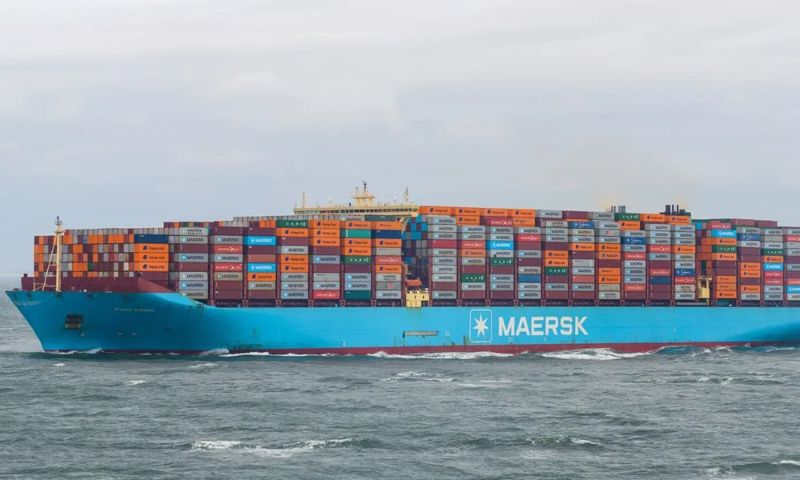
Global port congestion, high import volumes and inland transport disruptions are creating operational challenges across the United Kingdom and Ireland, prompting Maersk to warn customers that delays and cargo backlogs may take time to clear.
In an operational advisory issued on November 24, Danish shipping and logistics group Maersk said sustained high import volumes, vessel schedule delays, adverse weather conditions and recent rail disruptions had placed pressure on both port and inland operations across its UK and Ireland network.
Although services are gradually recovering, accumulated cargo backlogs and high utilisation of inland storage facilities are delaying a return to normal operations. Maersk cautioned that disruption at one point in the logistics chain could create knock-on effects elsewhere.
The company said its operational teams were working with port terminals, vessel partners, road hauliers and rail operators to improve cargo flows. Measures include reviewing vessel and cargo plans, arranging alternative routes and inland transport solutions, and supporting the movement of empty containers.
Maersk has urged customers to collect available import containers promptly to release terminal and inland storage capacity. Exporters have also been advised to ensure cargo is ready before presenting containers at terminals and to verify the latest empty-container return instructions before dispatching trucks.
Congestion extends beyond the UK
The operational challenges are part of a wider pattern of congestion affecting major ports across several regions.
According to Kuehne+Nagel’s latest port operations update, London Gateway was experiencing average vessel waiting times of around two days. Although dry and refrigerated container yard occupancy had eased to 75% and 58%, respectively, high laden-container density continued to affect terminal productivity. Berth restrictions were expected to remain in place until mid-December.
At Southampton, average vessel waiting times stood at approximately 1.5 days, while congestion at major North European hubs continued to complicate schedule recovery. Hamburg’s CTH terminal reported yard occupancy of 99%, while Bremerhaven was operating at 89%.
Congestion was also reported across Asian gateways. Yard utilisation at three Tokyo terminals ranged between 107% and 120%, while Port Klang and Vietnam’s Cai Mep terminals recorded utilisation levels above 90%. In Africa, vessels calling at Mozambique’s Beira faced average waiting times exceeding 13 days.
These conditions highlight how port congestion, weather-related interruptions, vessel delays and limited inland transport capacity can combine to disrupt global cargo movements.
For shippers and freight forwarders, the continuing uncertainty could mean longer transit times, less predictable delivery schedules and additional pressure on container availability and logistics costs. Maersk has advised customers to maintain flexibility in inland transport planning while the network works through existing backlogs.
The pace of recovery will depend on how quickly accumulated cargo is cleared and sufficient capacity is restored across terminals, rail services, road transport and inland storage facilities.