
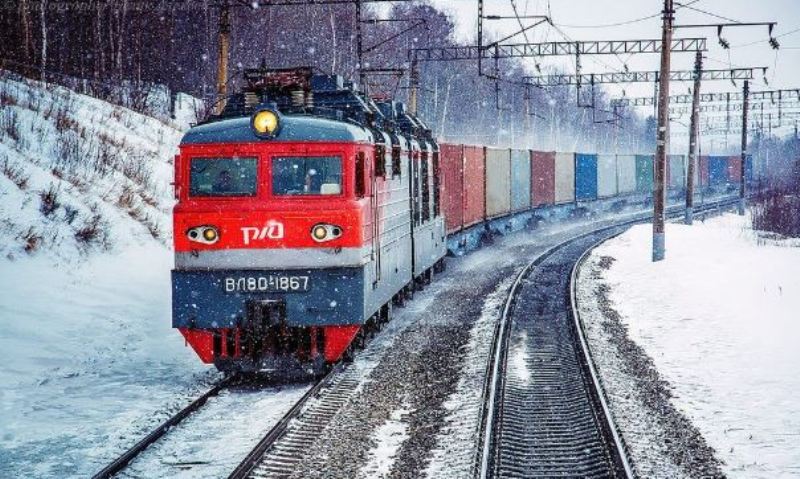
Russian Railways is exploring the possibility of establishing direct rail freight shipments to Pakistan as Moscow seeks to expand trade connectivity with South Asia and diversify its international transport corridors.
The proposed initiative is expected to use the International North-South Transport Corridor (INSTC), a multimodal network designed to connect Russia with markets in South Asia through Iran and other regional transport links.
RZD Logistics, the freight transportation arm associated with Russian Railways, is evaluating potential cargo movements and logistical arrangements for shipments to Pakistan. Trial shipments are also being considered to assess the commercial viability and operational requirements of the proposed route.
The proposed connection is expected to operate through the eastern branch of the INSTC, linking Russia with Pakistan through Central Asian countries and Iran. The corridor offers an alternative to conventional maritime transportation and could provide exporters with additional options for moving goods between the two markets.
According to RZD Logistics First Deputy CEO Dmitry Kryukov, the company has already tested the western, eastern and Trans-Caspian routes of the INSTC. The company is scheduled to hold discussions with Pakistani counterparts in December 2026 to organise trial shipments.
Pakistan has also indicated that it aims to launch its first freight train to Russia before the end of 2026. The proposed route will pass through Iran, Turkmenistan and Kazakhstan, providing an overland connection between the two countries.
The initiative is expected to strengthen bilateral trade, improve regional logistics connectivity and create new opportunities for the movement of agricultural products, chemicals, construction materials and other commercial cargo.
If successfully implemented, the rail connection could provide an additional freight option for traders while strengthening the role of the International North-South Transport Corridor in connecting Russia with South Asian markets.