
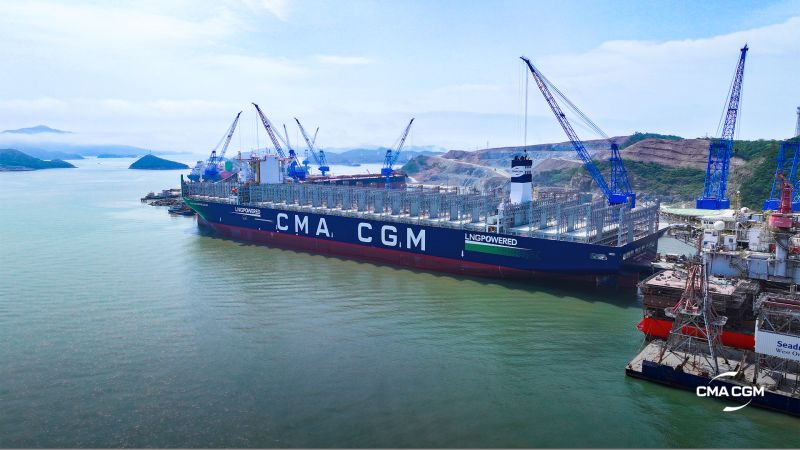
The Ocean Alliance is preparing to route both eastbound and westbound sailings of its Far East–North Europe FAL1 container service through the Suez Canal, marking another step towards restoring shipping operations along the traditional Asia–Europe trade corridor.
According to shipping intelligence provider DynaLiners, the westbound leg of the CMA CGM-operated service is set to return to the Suez Canal. The eastbound leg had already resumed Suez transits in October 2026.
The latest adjustment will enable the alliance to operate the service through the canal in both directions, replacing the longer routing around the Cape of Good Hope for the westbound journey.
The change is also expected to improve vessel utilisation. According to DynaLiners, the number of vessels deployed on the FAL1 service will be reduced from 15 to 14 following the revised routing arrangement.
The updated service rotation will cover:
Ningbo – Shanghai – Shenzhen (Yantian) – Singapore – Tanger Med – Southampton – Dunkirk – Gdansk – Le Havre – Southampton – Port Klang – Ningbo.
The return to the Suez route is expected to shorten voyage distances, improve vessel deployment efficiency and reduce the additional sailing time associated with diversions around southern Africa.
For shippers and freight forwarders, the move could improve transit-time predictability and strengthen connectivity between major Asian export centres and Northern European markets.
However, the restoration of Suez transits comes against a backdrop of continuing geopolitical and maritime security concerns in the Red Sea region. Shipping lines will need to monitor developments closely as they gradually reconsider their routing strategies.
The decision highlights a broader shift in container shipping networks, with carriers reassessing traditional routes as they seek to optimise vessel capacity, schedules and operating costs.