
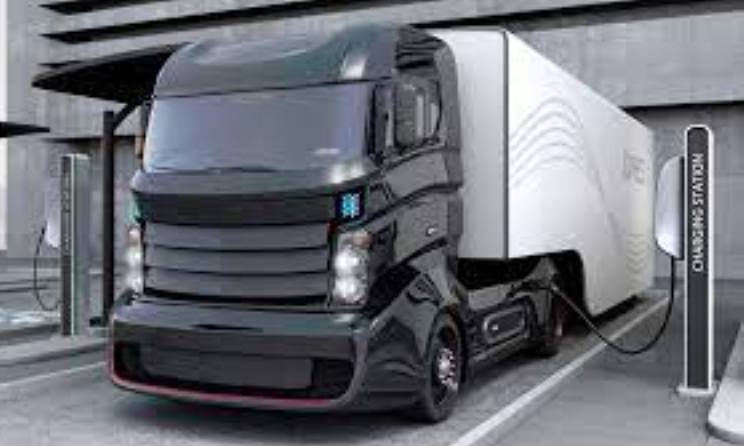
As part of its green logistics drive, India’s cement industry, which is the second largest in the world with an installed capacity of around 670 million tonnes per annum (MTPA), is piloting the usage of EV trucks (E-trucks) and has already deployed around 150 E-trucks, top cement industry officials said here on Thursday.
The cement industry is also looking to invest around Rs 40,000 crore in adding around 40MTPA capacity each year or 100-120MTPA capacity over the next three years or so, Cement Manufacturers’ Association (CMA) officials said on Thursday on the sidelines of the 20th edition of the Confederation of Indian Industry (CII)-Green Cementech 2024 conference that got underway in the city on Thursday and winds up on Friday. For each MT of capacity, an investment of around Rs 1,000 crore is required, they added.
On the industry pilot testing E-trucks, Cement Manufacturers’Association (CMA) president and Shree Cement Ltd managing director Neeraj Akhoury said it can bring down operating costs in the long run but challenges abound such as higher cost of ownership, heavy batteries, lack of adequate charging infrastructure and EV running range.
On the occasion a report on `Greening Logistics: Electrification in cement & raw material transport’ by CII and CMA was also released.
“Despite challenges such as higher cost of ownership, longer payback periods, and limited charging infrastructure, the cement sector has shown leadership by deploying EVs for material handling and dispatch operations, even on lead distance routes exceeding 100 kilometres,” said Madhavkrishna Singhania, chairman, Green Cementech 2024, and deputy MD & CEO of JK Cement Ltd.
He said the industry had recognised the long-term benefits of reduced emissions, lower energy costs, and regulatory compliance.
Pointing out that the industry is heavily reliant on road transport and internal combustion engine (ICE) trucks for moving cement, clinker and other raw materials across an average distance of 300km, the report said the cement industry currently accounts for 2.3 mtpa of carbon dioxide (CO2) emissions.
“The transition to E-trucks presents an opportunity to slash logistic costs by 25-40%. Vehicles that operate over 8,000 km per month can achieve profitability considering current energy and infrastructure costs. Additionally, E-trucks powered by renewable energy could cut CO2 emissions by up to 100% when compared to ICE trucks, which emit approximately 6 kg of CO2 per tonne of cement transported over a 100 km range,” the report said.