
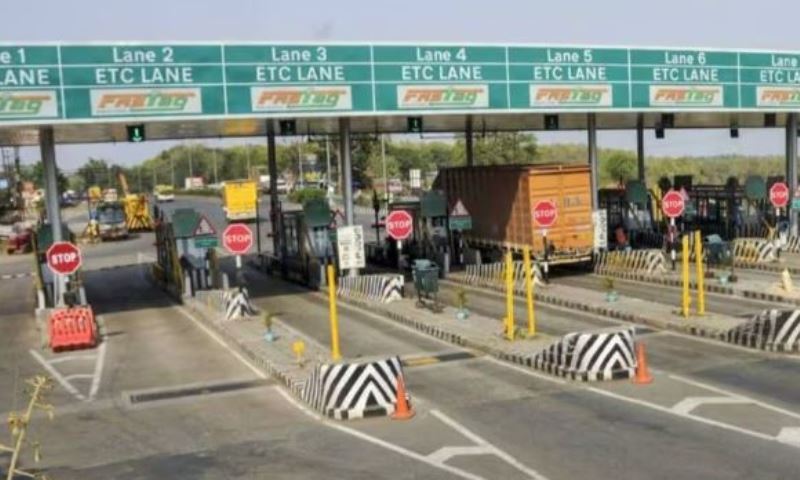
The Indian government is set to introduce an annual pass system to replace the existing toll collection method on national highways, aiming to streamline operations and improve convenience for commuters. Union Road Transport and Highways Minister Nitin Gadkari announced this initiative in the Lok Sabha, highlighting it as a step towards barrier-free tolling and seamless travel.
Gadkari elaborated on the pilot projects at locations such as Gharonda, Choryasi, Nemili, UER-II, and the Dwarka Expressway, where a satellite-based toll system was introduced. However, he noted that its widespread implementation requires additional satellite constellations and compatible receivers to ensure precise positioning. As an alternative, the government is advancing the Automatic Number Plate Recognition (ANPR) FASTag System, allowing free-flow toll collection without physical barriers.
Addressing concerns about transparency in toll charges, Gadkari reaffirmed that toll rates are determined under the National Highway-Fee Rules, 2008. These rates are publicly displayed at toll plazas, updated annually, and made available on the National Highway Authority of India’s website to prevent discrepancies.
Furthermore, the government has equipped over 325 national highway projects, spanning nearly 20,000 km, with the Advanced Traffic Management System (ATMS) to enhance road monitoring and efficiency.
Earlier, Gadkari emphasized in the Rajya Sabha that while tolls are crucial for financing infrastructure expansion, the government is committed to making the system more consumer-friendly by addressing concerns over toll plaza placements and charges. With national highway toll revenues soaring from ₹27,503 crore in 2019-20 to ₹64,809.86 crore in 2023-24, the upcoming policy aims to modernize India’s tolling framework, ensuring a seamless travel experience while sustaining essential revenue generation.