
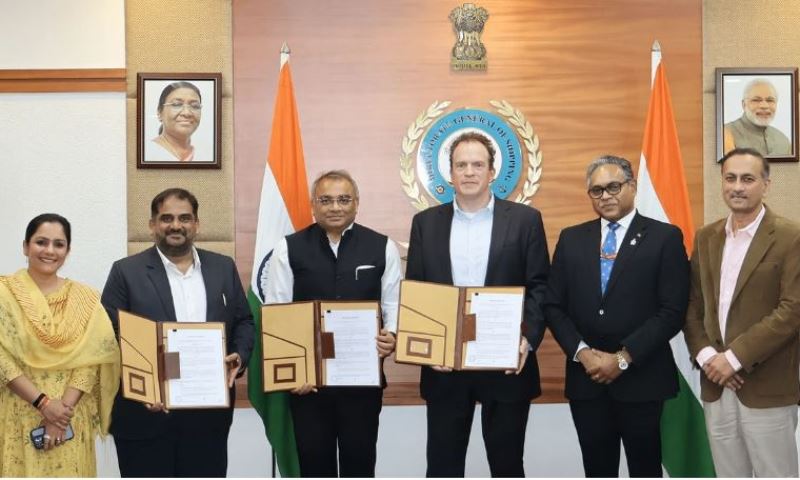
Adani Ports and Special Economic Zone Ltd (APSEZ) on Friday announced the operationalisation of India’s first designated Port of Refuge (PoR), marking a significant step in strengthening the country’s maritime emergency response infrastructure.
The initiative comes as India looks to enhance preparedness along its 11,000 km coastline and improve response mechanisms across major global shipping routes.
A Port of Refuge, as defined by the International Maritime Organization, is a location where vessels in distress can seek shelter to stabilise conditions, protect lives, and minimise environmental damage. While such systems are common in leading maritime economies, India had not formalised one until now.
Ports designated on both coasts
APSEZ has designated Dighi Port on the west coast and Gopalpur Port on the east coast as PoRs. These facilities will support vessels operating across the Arabian Sea, Persian Gulf, Bay of Bengal, and key routes towards the Malacca Strait.
The ports will offer critical emergency services including salvage and wreck removal, firefighting, pollution containment, and coordinated response operations using specialised equipment and trained teams.
Global collaboration for emergency response
The initiative is backed by a tripartite memorandum of understanding with SMIT Salvage, part of Royal Boskalis Westminster NV, and the Maritime Emergency Response Centre. The partnership brings international salvage expertise and integrated response capabilities to India’s maritime ecosystem.
APSEZ said the framework aligns with international maritime conventions and aims to set new benchmarks in coastal safety.
Ashwani Gupta, CEO of APSEZ, stated that the development would elevate India’s maritime preparedness, while Director General of Shipping Shyam Jagannathan highlighted that a standardised PoR framework would enable faster and more coordinated responses during maritime incidents.
Richard Janssen, Managing Director of SMIT Salvage, emphasised that access to a Port of Refuge is critical in ensuring swift and professional handling of distressed vessels and their cargo.
Strengthening trade and environmental safety
According to APSEZ, the initiative will enhance emergency readiness, reduce environmental risks through controlled handling of hazardous situations, and reinforce India’s position in global maritime trade.
By formalising the Port of Refuge framework, APSEZ and its partners aim to address long-standing gaps in maritime emergency infrastructure and support safer operations along key international shipping corridors.