
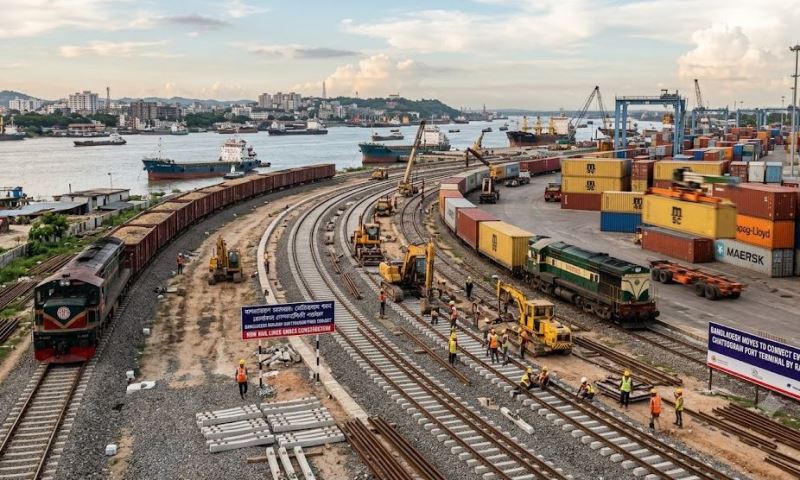
Bangladesh Railway is planning to establish rail connectivity with all existing and upcoming terminals at Chattogram Port to reduce cargo transportation costs, ease road congestion and improve freight-handling efficiency.
The initiative forms part of the government’s efforts to shift more freight from roads to rail under the Logistics Policy 2025, which targets increasing rail’s share of freight movement from the current 2–3% to 20%. Chattogram Port handles nearly 90% of Bangladesh’s export-import activities, making improved inland connectivity important for the country’s trade and logistics network.
The proposed plan covers existing facilities, including the General Cargo Berth, Chittagong Container Terminal, Patenga Container Terminal and New Mooring Container Terminal, as well as terminals under development, such as Laldia Container Terminal and Bay Terminal.
Under the World Bank-funded Green Railway Transport Project Preparation Facility, feasibility studies will assess the infrastructure required to connect these facilities to the national railway network. The work will also examine improvements to the Dhaka–Chattogram freight corridor and rail connectivity between Faujdarhat and Chattogram Goods Port Yard.
The project will evaluate requirements for freight locomotives, container-handling equipment, storage facilities, loading tracks and other supporting infrastructure. Existing rail connections at some terminals have limited capacity, while the integration of metre-gauge tracks with future broad-gauge freight operations presents an additional challenge.
The project, valued at Tk 930 million, will also update feasibility studies and conceptual designs for a proposed rail link to the Mirsharai Economic Zone logistics hub. Project officials expect the studies to be completed by the end of 2027.
Expanded rail connectivity is expected to provide an alternative to truck-based cargo movement, potentially lowering inland transport costs and reducing pressure on roads. Greater use of rail could also help reduce transport-related emissions and improve the movement of import and export containers between the port and inland destinations.
The success of the initiative will depend on investment in rail infrastructure, adequate freight capacity and coordination among Bangladesh Railway, the port authority and terminal operators. If implemented effectively, the plan could strengthen multimodal logistics and support Bangladesh’s growing international trade.