
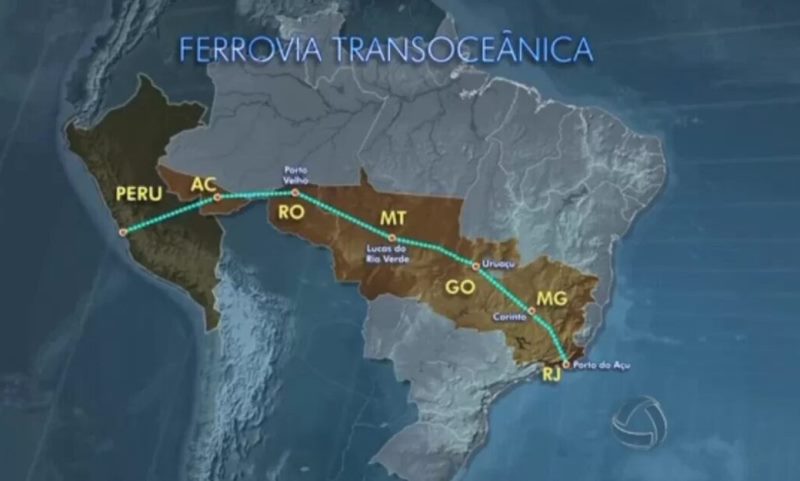
Brazil is in talks with China to build a railway connecting the Chinese-built mega Chancay port in Peru to Brazilian regions, Planning Minister Simone Tebet said on Friday.
‘They are very interested in helping Brazil, in crisscrossing the country with railways,’ Tebet told local outlet Carta Capital in an interview.
Chinese President Xi Jinping attended the inauguration of the deepwater port in November.
The $1.3 billion Chancay project is Beijing’s largest investment in South America and part of its push to expand trade and influence across the continent.
Tebet said her team met just over a month ago with a Chinese group representing the country’s state-owned railway company to discuss a potential route linking the port to Brazil, based on the view that Chancay lies on the shortest path to China, cutting maritime trade distance by at least 10,000 kilometers (6,210 miles).
Initially, the Chinese side had considered a route through the Amazon region, but the Brazilian government firmly rejected the idea due to the presence of the rainforest and indigenous peoples, Tebet said.
‘They ended up understanding, after a full analysis, and the idea now is to chart a southern route,’ she said, noting that the railway would pass through the states of Acre and Tocantins, eventually reaching Bahia and connecting to the West-East Integration Railway (FIOL).
The FIOL railway, which remains under construction, will stretch about 1,527 kilometers from Figueiropolis in Tocantins to the Atlantic port of Ilheus in Bahia.
Tebet acknowledged that the project would take time to materialize but said it would be transformative for economic development in Brazil’s poorer interior regions.
‘You could be talking about five years, maybe eight, to see a project like this completed,’ she added.