
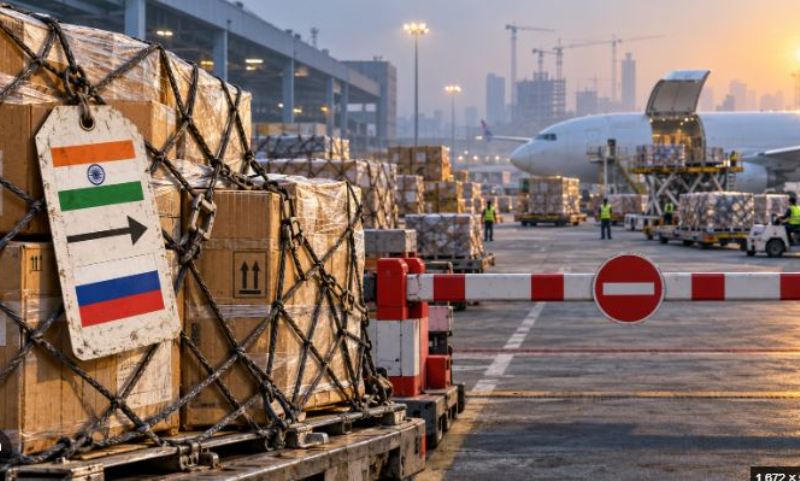
Nine international airlines have temporarily suspended their freighter operations at Navi Mumbai International Airport (NMIA) amid severe cargo-handling bottlenecks, raising concerns over infrastructure readiness, manpower availability and operational efficiency at the new airport.
The airlines affected include Emirates SkyCargo, China Airlines Cargo, Singapore Airlines Cargo, Malaysia Airlines’ MASkargo, Lufthansa Cargo, Air France KLM Martinair Cargo, Saudia Cargo, EgyptAir Cargo and Ethiopian Cargo & Logistics Services. Several other carriers, including Turkish Cargo, Cathay Cargo and Azerbaijan’s Silk Way West Airlines, have also been operating intermittently.
The disruption follows the mandatory shift of most international freighter operations from Mumbai airport to NMIA by Adani Airport Holdings Ltd. Industry estimates indicate that the suspended flights represent a loss of approximately 1,000 tonnes of daily cargo capacity, comprising around 400 tonnes of export capacity and 600 tonnes of import capacity. This accounts for nearly 35-40% of the Mumbai region’s air cargo capacity.
Cargo-handling delays have emerged as a major concern. Industry stakeholders report that shipments can take three to four days to move from the aircraft parking area to warehouses, followed by another two to three days for identification and retrieval. The overall process of cargo movement and customs clearance can consequently extend to eight to ten days, compared with significantly shorter turnaround times at the existing Mumbai airport.
The Air Cargo Association of India and the Brihanmumbai Customs Brokers Association have raised concerns over stranded import consignments, missing unit load devices (ULDs), inadequate handling equipment and delays in processing export shipments. Export cargo has reportedly remained unloaded from trucks for up to two days, causing some consignments to miss flight cut-off times.
The disruption is affecting several export-oriented industries, particularly pharmaceuticals, chemicals, engineering goods and textiles. Some shipments are being diverted to alternative airports, including Ahmedabad, Bengaluru and Delhi, adding to transportation costs and logistical complexity.
Lufthansa Cargo has confirmed significant operational challenges arising from insufficient cargo-handling capacity and suspended its NMIA operations until November 30. The airline indicated that restoring regular services would depend on sustained improvements in handling capacity, equipment availability and operational reliability.
Airport operator Navi Mumbai International Airport Ltd (NMIAL) has stated that cargo operations are continuing and that infrastructure and capabilities are being progressively expanded to support growing volumes.
Industry stakeholders have urged the government to intervene and consider allowing international freighter operations to return temporarily to Mumbai airport until NMIA establishes adequate cargo-handling infrastructure and manpower.
The situation highlights the importance of ensuring operational readiness and sufficient cargo infrastructure when shifting major air freight operations to a new airport. A prolonged disruption could affect India’s export supply chains and Mumbai’s position as a major international air cargo gateway.