
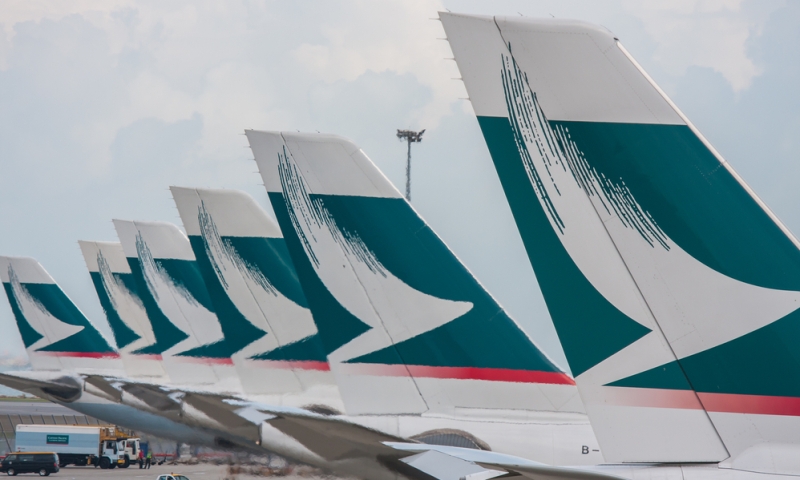
Cathay Group has temporarily suspended its passenger and cargo operations to key Middle East destinations, citing heightened security risks and operational challenges linked to ongoing regional tensions.
The move affects both passenger flights operated by Cathay Pacific and cargo services under its logistics arm, disrupting connectivity between Hong Kong and several major hubs in the Gulf region.
The airline group said the decision was taken as a precautionary measure to ensure the safety of crew and passengers, as well as to manage potential risks associated with airspace restrictions and volatile conditions in the region.
Industry sources indicated that rerouting options and contingency plans are being evaluated, though prolonged disruptions could impact cargo flows, particularly for time-sensitive shipments such as electronics, perishables, and high-value goods.
The suspension comes amid broader challenges facing the aviation and shipping sectors, with multiple carriers adjusting schedules and routes to avoid conflict-prone zones. Increased insurance costs and longer flight paths have also added to operational pressures.
Cathay Group noted that it will continue to monitor the situation closely and resume services once conditions stabilize and it is deemed safe to operate.
The development underscores the growing impact of geopolitical tensions on global air connectivity and supply chains, as airlines prioritize safety while navigating an increasingly uncertain operating environment.