
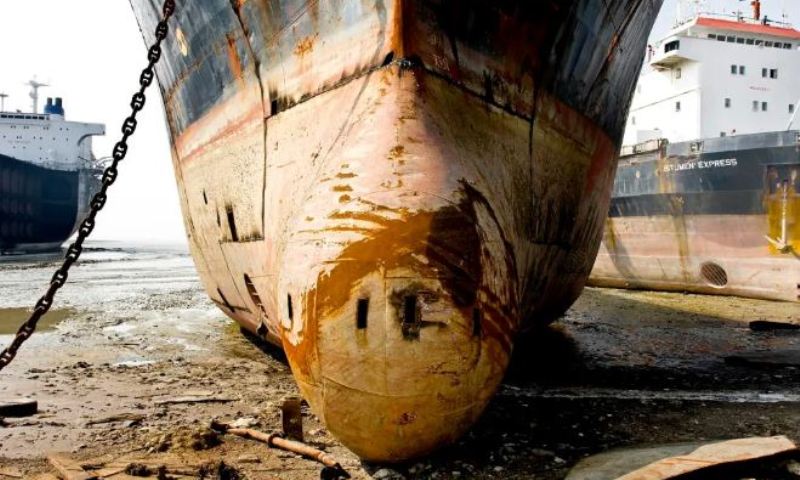
The government will grant 1,500 yuan ($247) per gross tonne for shipping companies to replace obsolete ships, according to a statement on the transport ministry website. The award applies to vessels scrapped in the years 2013 through 2015.
Chinese shipbuilders also stand to benefit from the subsidy, half of which is awarded only after replacement orders are placed.
“The programme will be positive for the shipbuilding sector in the long term,” said Lawrence Li, a Shanghai-based analyst at UOB Kay-Hian Holdings. “In the near term, it may not be material for the shipping industry, as the incentive is not attractive enough and many cash-strapped shipping firms may not be able to place new orders amid a bad market.”
Under the new programme, ship operators get half the money upon completing scrapping and the rest after placing new building orders, according to the statement. By comparison, under a 2010 rule, they had to complete scrapping and place new ship orders before getting any of the subsidy. The programme is “somewhat disappointing” as it didn’t lower the age requirement for ships that can be scrapped, which means less tonnage is eligible, according to a note published today by Credit Suisse Group analysts led by Davin Wu.
The Baltic Dry Index has slumped 41 per cent in the past four years. The monthly index that tracks prices for all types of vessels dropped 31 per cent in November from its peak in September 2008.