
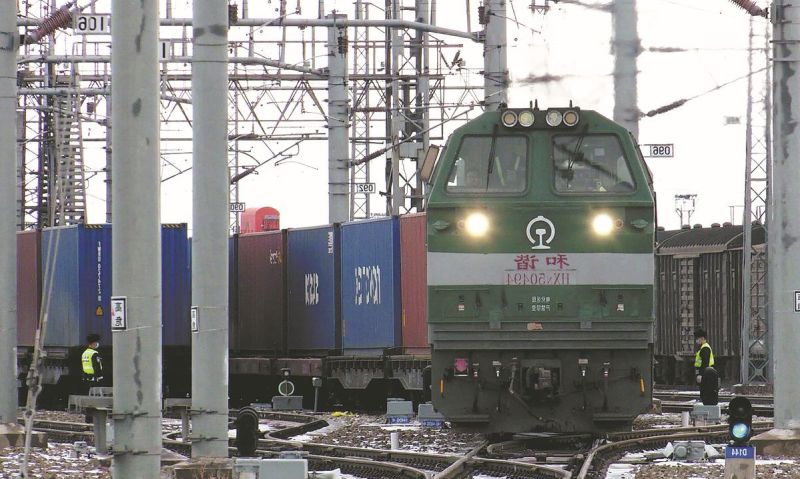
China has further solidified its position in global trade by launching a new rail-road freight service that connects Chongqing with Vientiane. This initiative aims to streamline logistics, improve exports, and enhance trade with ASEAN nations. For Indian businesses, especially those in manufacturing, logistics, and exports, this development presents exciting opportunities for faster, more cost-effective supply chains and expanded market reach.
The new rail-road freight service is a game-changer for trade between China and ASEAN nations, driving industrial growth. Integrating both railway and road transport, the service offers a faster and more affordable logistics solution, which could be highly beneficial for Indian companies looking to explore new trade routes and improve efficiency in their supply chains.
A freight train loaded with 30 containers, valued at ¥10 million ($1.37 million), recently departed Chongqing, travelling via the China-Laos Railway. The train is expected to reach Vientiane in just 5 days, improving connectivity between China and Southeast Asia. Complementing the rail route is a cross-border road freight service that transports auto parts, motorcycles, and electromechanical goods, ensuring goods are delivered in just four days, significantly reducing delivery time and improving supply chain efficiency.
This improved transportation corridor linking China, Laos, Thailand, and Malaysia strengthens trade routes across Southeast Asia. For India, this development highlights the growing importance of efficient logistics networks in the region, potentially opening up new trade opportunities for Indian exporters, especially in the motorcycle, auto components, and electronic sectors.
Chongqing remains China’s largest motorcycle exporter, shipping millions of units annually. The city’s booming export market, combined with enhanced logistics systems, creates an opportunity for Indian manufacturers to learn and adopt similar practices to improve their own export strategies. Indian manufacturers, particularly in the auto and motorcycle sectors, can look at this development as a way to enhance their competitive edge in Southeast Asian markets, which are crucial for India’s growth.
India has been working to deepen its trade relations with ASEAN through initiatives like the Act East Policy. As China continues to boost its connectivity and exports to ASEAN, Indian businesses can benefit from the increased demand for goods in Southeast Asia. The logistics improvements and faster delivery times offered by this rail-road service may offer Indian exporters new routes to explore when shipping to countries like Thailand, Malaysia, and Laos.
For instance, Indian motorcycle manufacturers, which are globally competitive, could find the streamlined logistics solutions between China and ASEAN beneficial. These improvements could help reduce shipping times and lower costs, making it easier for Indian brands to compete in these fast-growing markets.
The rail-road freight service is not just an opportunity for China; it also underscores the need for India to improve its own infrastructure and logistics networks to remain competitive in the global market. As ASEAN trade volumes continue to grow, Indian companies and exporters should look to integrate similar advanced logistics solutions in their operations to stay ahead of the competition.
The new service also contributes to China’s broader trade network expansion. With trade between China and ASEAN countries reaching ¥1.15 trillion ($158.1 billion), it highlights the significant growth in the region. For India, this signals a potential shift in global supply chains that could affect its trade strategies and economic opportunities. By strengthening regional connections and improving logistics, India can explore ways to collaborate with ASEAN countries to grow its own exports and global competitiveness.
China’s launch of the rail-road freight service is a key step in enhancing regional trade connectivity, especially between China and ASEAN. For Indian businesses, particularly those in manufacturing and logistics, this development represents a major opportunity to streamline supply chains, explore new export markets, and stay competitive in the fast-growing ASEAN region. With enhanced trade routes and stronger industrial ties, India can leverage these improvements to further strengthen its position in the global marketplace