
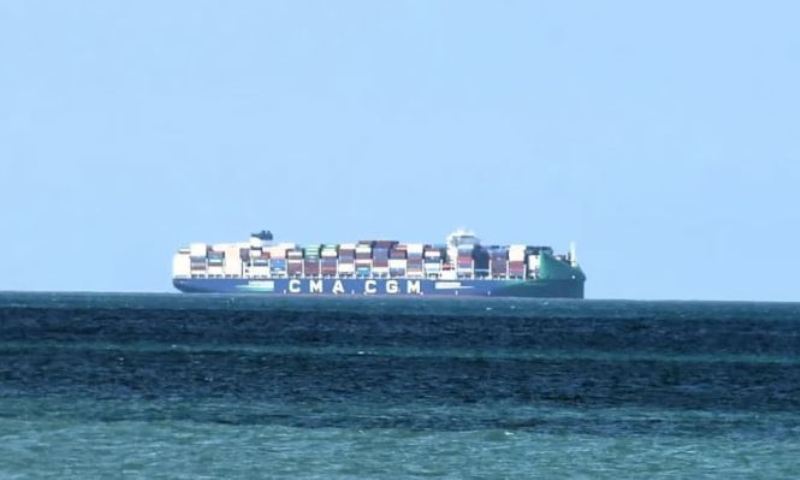
The South African Maritime Safety Authority (SAMSA) said the 13,000 teu CMA CGM Belem had arrived in Algoa Bay at the weekend and they working to secure a berth at the Port of Ngqurha as soon as possible.
“The CMA CGM Belem, a container ship sailing under the Maltese flag, encountered severe weather off the coast of Richards Bay on the night of 15 August 2024, resulting in a significant stow collapse and a loss of 99 containers overboard.
“The vessel, which measures 336 meters in length, 51 metres in height, and has a draft of 14.8 metres, had initially sought refuge at Maputo Bay but was redirected to Gqeberha.
The weather is currently calm, and no danger is posed to the vessel.
The incident with the CMA CGM Belem comes just a month after the CMA CGM Benjamin Franklin lost 44 containers overboard off the coast of South Africa while sailing round the Cape of Good Hope.
Both vessels were on voyages between Asia and Europe and transiting the Cape of Good Hope due to the security situation in the Red Sea.
Container ships would normally transit the Red Sea and Suez Canal between Asia and Europe, however, the vast majority have diverted to sailing via the Cape of Good Hope to avoid attacks on shipping in the Red Sea by the Houthi in Yemen. This has exposed vessels that would not normally transit the African cape to severe winter storms in the region.