
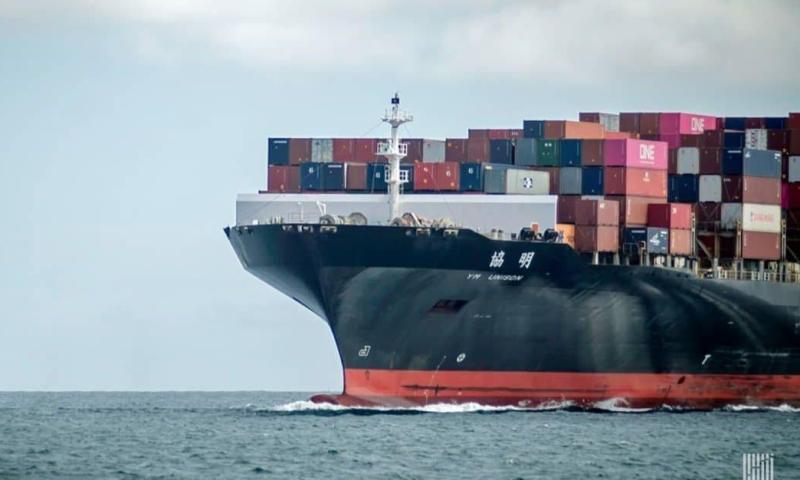
Global container shipping schedule reliability has become increasingly seasonal since the COVID-19 pandemic, with liner services experiencing weaker punctuality during the early months of the year and recovering only as summer approaches, according to new analysis by maritime consultancy Sea-Intelligence.
The analysis, based on Sea-Intelligence’s Global Liner Performance database covering monthly vessel arrivals from July 2011 to September 2026, highlights a significant shift in the relationship between schedule reliability and vessel delays.
Before the pandemic, between 2013 and 2019, global schedule reliability generally declined during the early months of the year, improved through spring and early summer, experienced a slight dip in late summer and reached another peak in October and November.
However, this established seasonal pattern has become more pronounced since 2020, with reliability generally weaker at the beginning of the year and stronger during the summer months.
Sea-Intelligence also found that weekly liner service deployments have become considerably more volatile across major global trade routes. Its analysis examined four key trades: Asia–North America West Coast, Asia–North America East Coast, Asia–North Europe and Asia–Mediterranean.
The study accounted for changes arising from new service launches and cancellations, blank sailings, schedule slippage and seasonal or niche services. It measured operational volatility by comparing the annual standard deviation in weekly service numbers against the average number of services operated.
The findings revealed a clear increase in week-to-week fluctuations across all four trades from 2020 onwards, indicating greater uncertainty over the actual number of services operating compared with published schedules.
The increase was particularly significant on Asia–Europe routes. Comparing average volatility during 2013–2019 with the 2020–2026 period, Asia–North America East Coast recorded the smallest increase at 26%, while Asia–North Europe experienced the largest rise at 78%.
The growing volatility presents challenges not only for shippers and freight forwarders but also for container terminal operators, who must plan manpower, equipment and berth resources around increasingly unpredictable vessel arrivals and cargo volumes.
Sudden changes in weekly service deployments can create unexpected operational pressure at terminals, increasing the risk of congestion and potentially further undermining schedule reliability.
The findings underline how the post-pandemic container shipping environment has become less predictable, with seasonal fluctuations in punctuality and unstable service deployments adding to the planning difficulties faced by the global supply chain.