
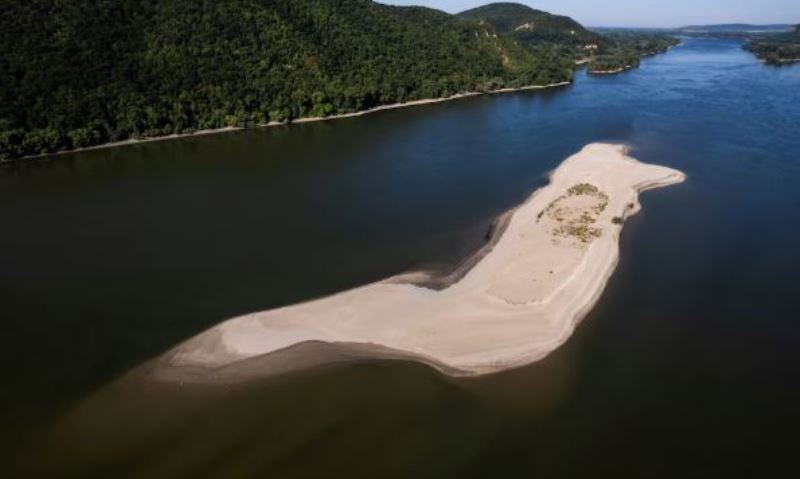
Exceptionally low water levels on the Danube River are disrupting cargo transportation across Central and Eastern Europe, forcing inland vessels to operate with sharply reduced loads and creating delays and uncertainty for shippers.
The prolonged heatwave and lack of rainfall have pushed water levels along several sections of the Danube to historically low levels. The resulting restrictions are limiting vessel draught and reducing the amount of cargo that barges can carry on the important European inland waterway.
In Serbia, vessels have been operating at only around 25% to 30% of normal capacity, while shipping traffic has also been reduced as operators face difficult navigation conditions.
The situation is particularly challenging for bulk cargo operators, including those moving grain, agricultural commodities, fuels and industrial raw materials. Lower loading levels mean more vessels may be required to transport the same volume of cargo, increasing operating costs and extending transit times.
Romania has also experienced severe disruption. Danube water levels there fell to their lowest level since 1996 in July, partially disrupting shipping and leaving grain barges idle in some areas.
The impact extends beyond freight transportation. Extremely low water levels have affected energy infrastructure along the river, with nuclear power plants in Hungary, Romania and Bulgaria facing operational challenges linked to reduced river flows and cooling-water availability.
The Danube is a critical trade artery connecting numerous European countries with the Black Sea. Persistent navigation restrictions therefore have the potential to affect regional supply chains, particularly where inland waterways provide an important alternative to road and rail transportation.
The Danube Commission has warned that prolonged periods of low water and increasing hydrological volatility are becoming a growing challenge for navigation. Authorities and shipping companies are examining measures including fairway maintenance, dredging, improved water-level monitoring and better navigation management.
For logistics operators, the current disruption highlights the vulnerability of Europe’s inland freight network to extreme weather. Shippers may increasingly need to combine river transport with rail and road alternatives, while operators could face higher costs from smaller cargo loads, additional voyages and longer transit times.
If dry and hot conditions persist, the Danube’s reduced navigability could continue to place pressure on European cargo flows and add another layer of disruption to already stretched regional supply chains.