
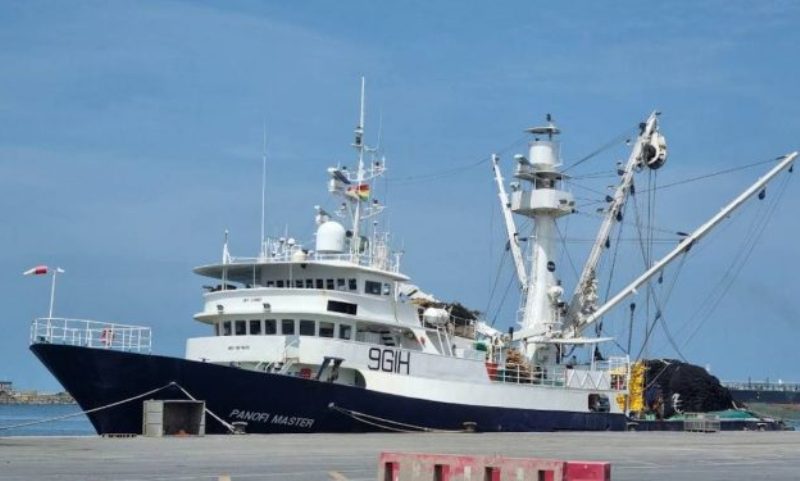
A technical team from TMT, Stop Illegal Fishing (SIF) and Global Fishing Watch (GFW) travelled to Ghana to work with the Ghana Fisheries Commission’s Monitoring Control and Surveillance (MCS) Division in the next stage of development of Standard Operating Procedures (SOPs) to guide port state controls in Ghanaian fisheries ports.
The SOPs detail the steps to be taken in the assessment of advanced requests for port access and the conducting of inspections in port.
The mission allowed for the SOPs to be adjusted based on the recent experience of the Ghana Fisheries Monitoring Centre and Fisheries Inspectors who had been trialling the first version of the SOPs since their development late last year.
The mission also provided an opportunity for mentoring on key steps under the SOPs, from the receipt and assessment of a request for port access, though the briefing of the inspection team, to the completion of the inspection and necessary follow-up activities.
The Ghana SOPs will be used to create model procedures which other States may use as a base to develop their own SOPs, tailored as necessary to their context.
This includes other members of the Fisheries Committee for the West Central Gulf of Guinea and other countries participating in the joint TMT-GFW programme “Intelligence-led Fisheries Port Controls” which aims to support the practical implementation of the PSMA through a risk-based approach and the use of new tools.