
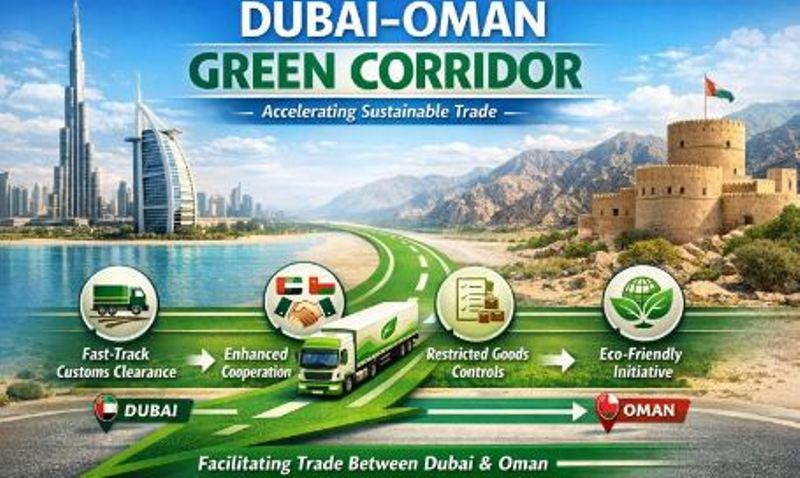
Dubai has activated a new green corridor with Oman aimed at streamlining cargo movement across sea and air routes, in a move designed to boost trade efficiency and reduce transit times.
The initiative enables faster clearance of goods by simplifying customs procedures and enhancing coordination between logistics and regulatory authorities in both regions. The corridor is expected to facilitate smoother movement of shipments, particularly for time-sensitive and high-value cargo.
Officials said the green corridor integrates digital systems and pre-clearance mechanisms, allowing consignments to move with minimal delays at ports and airports. This is likely to benefit exporters and importers by cutting dwell times and lowering overall logistics costs.
The development strengthens Dubai’s position as a key logistics hub in the region, while also enhancing trade connectivity with Oman. Businesses operating across sectors such as food, pharmaceuticals, and consumer goods are expected to gain from improved supply chain reliability.
Industry participants note that the corridor aligns with broader efforts to promote multimodal transport solutions, combining sea and air connectivity for greater flexibility in cargo movement.
With trade volumes between the UAE and Oman on the rise, the green corridor is set to play a crucial role in supporting faster, more efficient cross-border logistics and reinforcing regional economic integration.