
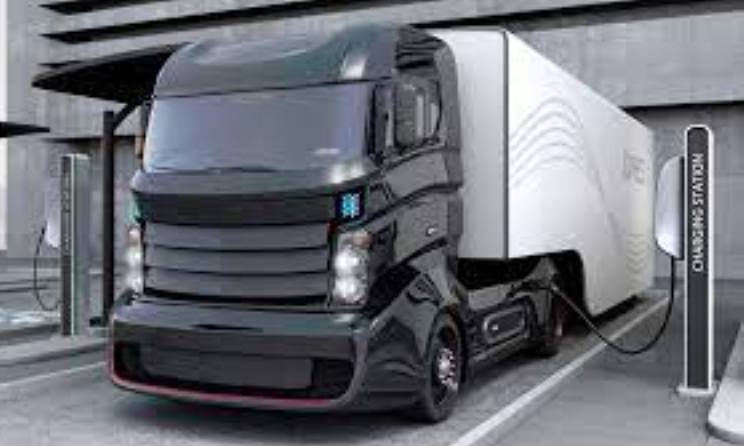
In a major stride toward future-ready logistics, Dubai has unveiled a comprehensive regulatory framework for autonomous heavy vehicles, setting the stage for large-scale driverless freight operations across the emirate.
The initiative follows closely on the heels of permitting three Chinese firms — Baidu’s Apollo Go, WeRide, and Pony.ai — to begin testing autonomous cars on public roads. The framework establishes licensing, safety, and operational protocols, supporting Dubai’s broader strategy to transform its land transport sector, double its economic output, and achieve 25% autonomous mobility by 2030.
Two-Phase Launch Plan for Autonomous Trucks
The Roads and Transport Authority (RTA) has finalized a two-phase regulatory rollout. During the pilot phase, select routes will operate under safety driver supervision, while others will run fully autonomously. This dual approach balances real-world testing with necessary oversight.
“The regulatory framework is a key component in supporting the logistics sector, by harnessing autonomous driving technologies to increase operational efficiency, reduce carbon emissions, and enhance traffic safety,” said His Excellency Mattar Al Tayer, Director-General and Chairman of the Board of Executive Directors of the RTA.
Dubai’s land logistics sector currently comprises 61,290 heavy vehicles, ranging from 3.5 to 65 tons. The framework accommodates this existing fleet while laying the foundation for future autonomous deployments.
Strategy-Driven, Technology-Backed Transformation
The framework forms part of the Dubai Land Commercial and Logistics Transport Strategy 2030, which aims to:
Double the sector’s direct contribution to Dubai’s economy to AED 16.8 billion
Increase technology adoption in sector infrastructure by 75%
Reduce carbon emissions by 30%
Improve operational efficiency by 10%
It aligns with six other Dubai strategies, including the Traffic Safety Strategy, Autonomous Mobility Strategy, Zero-Emission Public Transport Strategy, Assets Strategy, Investment Strategy, and Digital Strategy, while encompassing 17 key projects to modernize the sector and support innovation.
Earlier Milestone: Autonomous Vehicle Trials
Just a week prior, the RTA granted testing permits to Baidu’s Apollo Go, WeRide, and Pony.ai, marking Dubai’s first on-road trials for passenger-focused autonomous vehicles. These trials will evaluate vehicle performance under local traffic conditions and aim to advance the city’s smart mobility and self-driving taxi ambitions.
“With this step, the RTA adds a new dimension to Dubai’s public transport system,” the authority noted. “Autonomous solutions will complement existing modes while advancing toward the city’s smart mobility goals.”
By integrating autonomous logistics and passenger vehicles, Dubai reinforces its global leadership in smart mobility and accelerates its journey toward achieving 25% autonomous travel by 2030.