
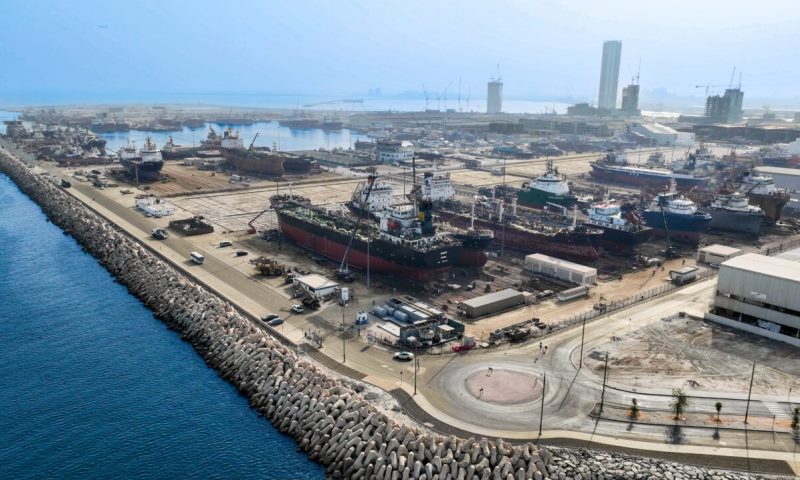
Dubai Maritime City (DMC) is experiencing a sharp increase in demand for dry-berth facilities, reflecting growing activity in Dubai’s maritime and marine-services sector and increasing pressure on available vessel storage and maintenance capacity.
The rise in demand highlights the growing importance of Dubai as a regional hub for ship repair, maintenance, marine services and vessel management. Dry berths provide vessel owners and operators with space to undertake maintenance, inspections, repairs and refurbishment without keeping vessels in the water.
Dubai Maritime City has emerged as an important centre for maritime businesses, offering shipyards, workshops, marine service providers, logistics companies and related industrial facilities in a strategically located waterfront complex.
The increase in dry-berth demand is being driven by a combination of factors, including growth in the regional maritime fleet, increased vessel maintenance requirements and Dubai’s expanding role as a hub connecting the Gulf, Middle East, Africa and South Asia.
The facility’s location within Dubai’s wider port and logistics ecosystem gives marine operators access to established shipping infrastructure and supporting services. Proximity to major commercial ports also allows vessel owners to combine maintenance activities with broader logistics and maritime operations.
Strong demand for dry berths can also indicate rising utilisation of Dubai’s marine repair ecosystem. Vessel owners increasingly seek strategically located maintenance facilities that can reduce downtime and provide access to specialised engineering, spare parts and technical services.
The trend comes as Dubai continues to invest in strengthening its maritime economy. The emirate has been promoting maritime services, shipbuilding, repair, marine engineering and related activities as part of efforts to expand the contribution of the maritime sector to the wider economy.
For shipowners and operators, the availability of dry-berth capacity is an important consideration when planning maintenance schedules. Limited availability can result in longer waiting periods and higher costs, making additional capacity increasingly valuable as regional fleet activity expands.
The growing demand is also creating opportunities for shipyards, marine engineering companies, equipment suppliers and logistics providers operating around Dubai Maritime City. Greater vessel activity can generate additional demand for repair services, spare parts, transportation and specialised technical support.
Dubai’s position as a major international logistics and maritime centre further strengthens the attractiveness of its marine-service infrastructure. The emirate is connected to major global shipping routes and serves as a gateway for trade between Asia, Europe, Africa and the Middle East.
The surge in dry-berth demand therefore points to broader growth in Dubai’s maritime services ecosystem. As vessel owners increasingly use the emirate for maintenance and repair activities, pressure on existing facilities could encourage further investment in dry-berth capacity and supporting marine infrastructure.
The continued expansion of Dubai Maritime City’s marine facilities is expected to help the emirate strengthen its position as a regional hub for vessel maintenance and maritime services, while supporting the wider growth of its blue economy.