
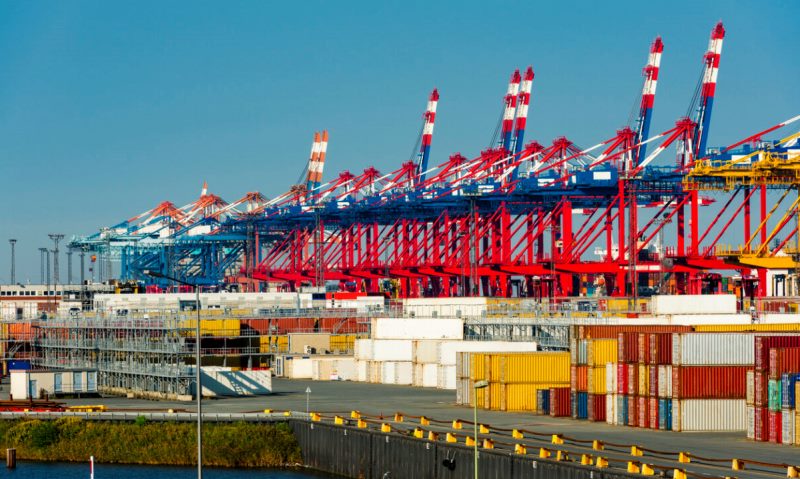
The ports of Bremen and Bremerhaven recorded strong growth in the first half of 2026, with container throughput rising 5.7% year on year to around 2.6 million TEUs, according to port operator bremenports.
Overall seaborne cargo throughput also increased significantly, reaching 34.5 million tonnes, up 5.9% compared with the first half of 2025. The growth extends the positive trajectory recorded by the German port group in recent years.
Containerised cargo was one of the strongest-performing segments during the six-month period. The increase in TEU volumes reflects continued demand for the ports’ international container services and their role as gateways to Germany’s industrial hinterland.
The port group also recorded growth across several other cargo categories. General cargo throughput increased 5.4% to around 30.2 million tonnes, while non-containerised general cargo rose 9.8% to approximately 3.5 million tonnes.
Iron and steel cargo performed particularly strongly, increasing 24.1% to around 851,000 tonnes. Overall bulk cargo throughput climbed 9.6% to approximately 4.3 million tonnes, providing an additional contribution to the port group’s first-half growth.
Vehicle handling also improved. The Bremen port group processed around 614,000 vehicles during H1, representing a 2.4% increase over the same period last year. This reversed the decline recorded in the previous year and underlined the importance of Bremerhaven as a major European automotive logistics hub.
Bremerhaven accounted for the majority of the cargo handled, recording around 29.2 million tonnes during the first six months, an increase of 5.3%. Bremen’s city ports handled approximately 5.3 million tonnes, up 9.3%, with both locations contributing to the overall improvement.
The container growth is particularly notable against a challenging European port environment. Other major North European gateways have experienced weaker or declining container volumes during the period, making Bremen/Bremerhaven’s 5.7% increase a relatively strong performance.
Strong rail and road connections with Germany’s hinterland remain an important competitive advantage for Bremerhaven. The port serves as both a gateway for cargo moving to and from German industrial centres and a transhipment hub connecting deep-sea services with regional feeder networks.
Bremen’s economic authorities said the latest figures demonstrate the importance of the ports to the regional economy and international trade. They also stressed the need for continued investment in efficient and future-ready port infrastructure to maintain competitiveness.
bremenports Managing Director Robert Howe said the first-half results demonstrate the ports’ resilience in a challenging market environment, with container traffic in particular showing strong performance. He also highlighted the efficiency of the logistics services supporting customers at the ports.
The latest results strengthen Bremerhaven’s position among Germany’s leading maritime gateways. With container volumes continuing to grow and other cargo segments also recording gains, the port group is entering the second half of 2026 with positive momentum.
Continued investment in terminal infrastructure, hinterland connectivity and efficient cargo handling will be important as Bremen and Bremerhaven seek to accommodate future trade growth and maintain their position as major logistics gateways for Germany and northern Europe.