
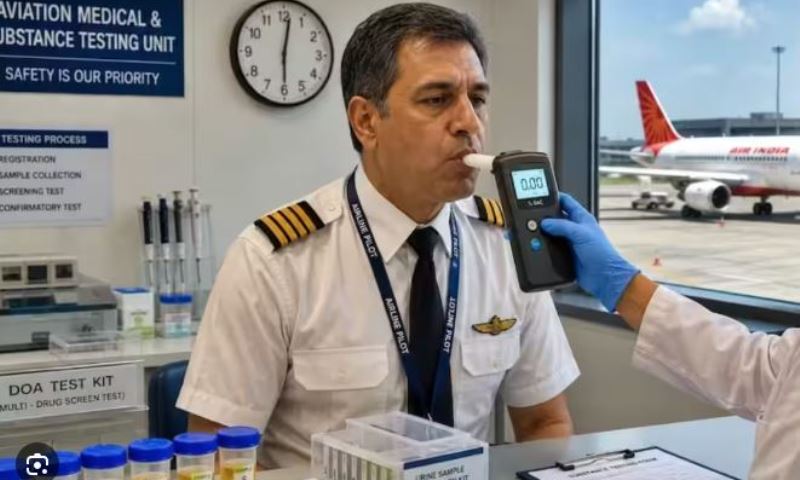
The Federation of Indian Pilots (FIP) has urged the Directorate General of Civil Aviation (DGCA) to strengthen India’s drug-testing framework for pilots by increasing the minimum annual random testing coverage from the current 10% to at least 25%. The proposal comes amid heightened scrutiny of psychoactive-substance use in the aviation sector.
In a representation to the DGCA, FIP also called for the introduction of oral-fluid, or saliva-based, testing as a complementary method to the existing urine-based screening system. The pilots’ body said the additional testing method could improve screening capacity, reduce operational disruptions and allow faster testing at airports and other operational locations.
Under the existing framework, operators are required to randomly test at least 10% of applicable flight crew annually. FIP has proposed raising this threshold to 25%, with pilots potentially being selected more than once and testing distributed unpredictably throughout the year.
The federation has proposed a hybrid testing model, under which oral-fluid testing could be used for high-volume random and airport-based screening, while urine testing would remain available where a longer detection window or specific medical considerations make it more appropriate. FIP has stressed that oral-fluid testing should complement rather than replace the established urine-testing system.
FIP has further recommended that any non-negative oral-fluid screening result should undergo laboratory confirmation, followed by medical review and regulatory determination. It has also called for stronger testing procedures following aviation-related incidents and in cases where there is reasonable suspicion of psychoactive-substance use.
The pilots’ body has suggested that the DGCA first conduct a controlled 12-month pilot programme involving selected airlines, airports, pilot groups, approved testing agencies and accredited laboratories before implementing oral-fluid testing nationwide.
FIP has also called for a comprehensive awareness programme covering prescription and over-the-counter medicines, herbal preparations, supplements and other commonly available products that could affect alertness, performance or produce a positive finding during drug or alcohol testing.
The proposals are aimed at making pilot drug screening more frequent, unpredictable and operationally efficient while maintaining scientific validation and safeguards for pilots. The DGCA will have to assess the regulatory, laboratory and implementation requirements before deciding on any changes to the existing testing regime.