
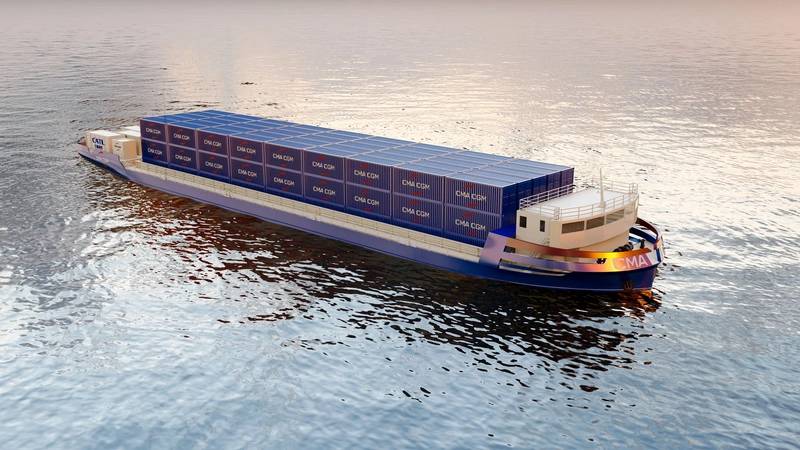
French shipping giant CMA CGM, the world’s third-largest container line, is exploring the possibility of launching barge and inland-waterway operations in India, the company said in an interaction with Business Standard.
The move reflects CMA CGM’s growing interest in expanding beyond its established ocean-shipping network and leveraging India’s inland waterways — rivers and canals — to offer multimodal logistics solutions to customers.
According to Senior Vice-President (Commercial Agencies Network) Ludovic Renou, the idea is currently at a “consideration” stage. The company is evaluating how to integrate waterways into its logistics offerings, contingent on viable infrastructure and regulatory support.
The interest coincides with the growth of India’s port and shipbuilding ambitions: earlier this year, CMA CGM placed a landmark order with Cochin Shipyard Limited (CSL) to build six dual-fuel (LNG) container vessels — a move seen as part of the firm’s long-term strategy to deepen its footprint in India’s maritime ecosystem.
CMA CGM also said it anticipates the upcoming Vadhavan Port (Maharashtra) could become a major catalyst for shipping growth; the firm describes the port as a potential gateway for placing India “in the global maritime premier league.”
If pursued, CMA CGM’s inland-waterway operations could enable more efficient, cost-effective cargo movement across inland regions — easing pressure on roads and rails, and helping integrate remote trade hubs with major ports.