
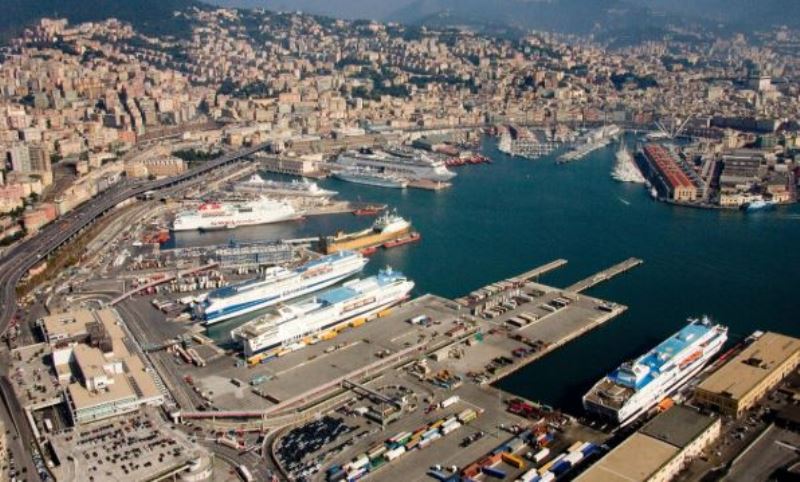
The Ports of Genoa and Savona-Vado handled 31.1 million tonnes of cargo in the first half of 2026, down 1.9% year-on-year, as weaker transhipment volumes and ongoing geopolitical uncertainty weighed on overall traffic.
Container traffic was particularly affected by the decline in transhipment. Total container volumes stood at 1.45 million TEUs during January-June, representing a 2.7% decrease from the same period in 2025. Transhipment volumes fell sharply by 21.3%, following strong growth recorded last year.
Gateway traffic, however, showed greater resilience. Volumes linked to the ports’ domestic and regional hinterland increased 1.6% during the first half, supported by stronger import activity. Full import containers rose 6.3%, while full containers moving to and from the hinterland increased 2.1%.
Rail freight also recorded positive momentum. The number of container trains increased 5.3% in the second quarter, supported by rising gateway traffic. Lombardy and Veneto accounted for almost 70% of containerised rail services connecting the ports with their hinterland.
Conventional cargo provided another bright spot, increasing 6.2% in the first half to nearly 6.7 million tonnes. Growth was largely driven by RoRo traffic, with both Genoa and Savona recording higher volumes than in the corresponding period of 2025.
The contrasting performance highlights the changing dynamics of the Ligurian port system. While gateway and conventional cargo remained relatively strong, the steep decline in transhipment significantly affected overall container volumes.
The ports are continuing to focus on strengthening hinterland connectivity and rail links as they navigate geopolitical uncertainty, shifting trade patterns and higher supply-chain costs. The first-half figures underline the importance of diversified cargo flows in maintaining the competitiveness of the Genoa-Savona port system.