
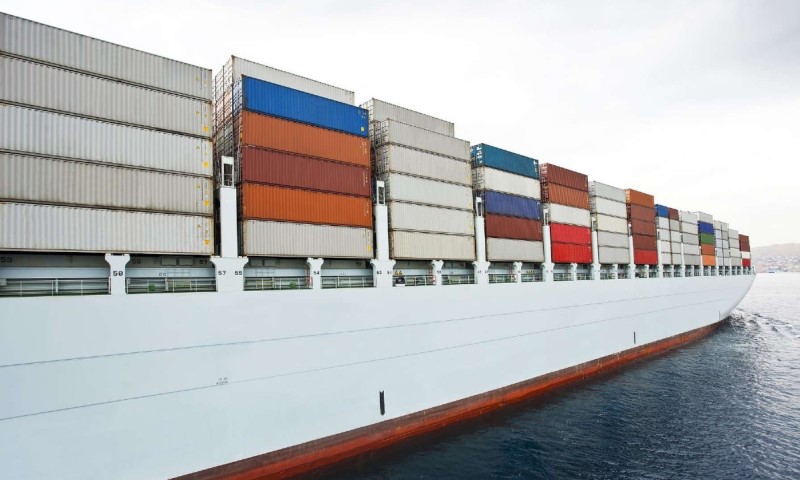
Global container port throughput crossed the 1 billion TEU mark in 2025, reaching an estimated 1.012 billion TEU, an 8% increase from 937.3 million TEU in 2024, according to DynaLiners’ latest Millionaires report.
The number of ports handling more than 1 million TEU also increased, with 171 ports collectively processing around 884 million TEU during the year, up 6% from 830.9 million TEU in 2024. Their share of global throughput, however, declined from 89% to 87% as smaller ports recorded significantly faster growth.
Ports outside the million-TEU group saw throughput rise 21% to 128.3 million TEU, compared with 106.4 million TEU in 2024.
The Far East remained the dominant region, with 63 qualifying ports handling 531.2 million TEU, up 6%. North America followed with 70 million TEU across 19 ports, while North Europe handled 60.5 million TEU through 14 ports.
Africa recorded the strongest regional growth at 12%, reaching 39.3 million TEU. Latin America grew 11% to 45.3 million TEU, while the Indian Subcontinent increased 10% to 35.3 million TEU.
Shanghai retained its position as the world’s largest container port, handling 55.06 million TEU in 2025, up 7%. Singapore remained second at 44.66 million TEU, while Ningbo moved into third place with 43.87 million TEU after recording 12% growth. Shenzhen and Qingdao ranked fourth and fifth with 35.41 million TEU and 32.89 million TEU, respectively.
China continued to lead at the national level, with 30 ports handling more than 1 million TEU collectively processing 306.4 million TEU, up 6%. The United States followed with 55.55 million TEU, while Singapore, Malaysia and South Korea ranked next.
India recorded 12% growth, with four qualifying ports handling nearly 20 million TEU in 2025.
Twelve ports crossed the 1 million TEU threshold for the first time in 2025, including Vizhinjam in India, along with Aqaba, Baltimore, Dar es Salaam, Dong Nai/Phuoc An, El Sokhna, Gdynia, Huanghua, Manaus, Rio Grande, Tanjung Emas and Wilhelmshaven. Montevideo was the only port to fall out of the million-TEU group.
Overall, 135 of the 171 ports recorded positive growth, while 36 reported declines. Fourteen ports increased throughput by at least 25%, while Haikou recorded the steepest decline at 28%.
The figures highlight the broad-based expansion of global container handling in 2025, with smaller gateways growing considerably faster than the established million-TEU ports.