
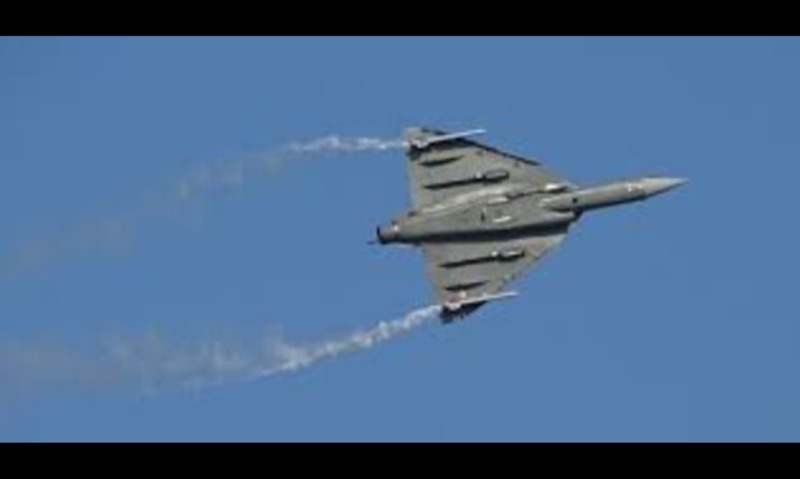
Hindustan Aeronautics Ltd (HAL) has proposed setting up the vertical under a CEO-ranked officer, who will report directly to the chairman of the state-run company.
Aircraft maker Hindustan Aeronautics Ltd (HAL) plans to soon create a new business division to push exports as it pursues opportunities to sell fighter jets and helicopters to several countries, chairman and managing director CB Ananthakrishnan said.
HAL has proposed setting up the vertical under a CEO-ranked officer, who will report directly to the chairman of the state-run company. It is eyeing exports to countries including Argentina, Nigeria, Egypt and the Philippines, which are interested in the light combat aircraft (LCA) Mk-1A and the advanced light helicopter (ALH).
“Many leads have come in and our products have attracted the attention of global customers. But somehow, we have not been able to convert these leads into orders. The restructuring is aimed at addressing this and getting a toehold in new markets,” Ananthakrishnan said.
The restructuring will involve creating a new position of CEO, marketing, who will steer exports, he said.
In the existing corporate structure, marketing comes under HAL’s director of operations, who fills many key roles and concentrating exclusively on exports is not possible. “We felt the need for an exclusive focus on exports as we have products that can meet the needs of many countries,” the HAL chief said.
HAL recently came close to winning a $920 million contract to supply 18 fighter jets to Malaysia, but was pipped by Korea Aerospace Industries earlier this year. “We believe the LCA was better (than KAI’s FA-50), but we lost the deal. It was a setback. We are now looking ahead and expecting some breakthrough orders soon,” he said.
Argentina is a likely customer for both LCA Mk-1A and ALH; Nigeria is looking at LCA Mk-1A, and so is Egypt; and the Philippines has shown interest in ALH, Ananthakrishnan said. The South American country needs 15 new fighters, Nigeria is looking for 16-18 jets, Egypt has projected a requirement for 20 aircraft, and the Philippines needs up to 20 helicopters.
Argentine Air Force teams have visited HAL and flown both LCA and ALH, and Indian officials held discussions with Nigerian president Bola Ahmed Tinubu on the possible sale of fighter jets to the African country during his visit to Delhi for the G20 Summit in September.
“We will offer a package to our foreign customers. Apart from selling aircraft, we will help them develop the local industry ecosystem so that they can take care of basic repairs and maintenance. HAL will involve the private industry in these countries,” Ananthakrishnan said.
Success in exports has been elusive for HAL despite having good products, including LCA and ALH, said Air Marshal Anil Chopra (retd), director general at the Centre for Air Power Studies.
“The new vertical should have technical and commercial teams to address the whole gamut of issues including the capabilities of the platforms, delivery timelines and life-cycle costs,” Chopra said. “That’s how global aircraft makers operate for the best outcomes. The next step should be setting up front offices in select target countries.”
India has set a defence export target of ₹35,000 crore by 2024-25, which experts believe is within the country’s reach. India’s focus on boosting exports comes alongside a big thrust on indigenisation of weapons and systems.
Military exports have risen sharply, and imports have recorded a drop on the back of policy initiatives and reforms. Exports grew 23 times between 2013-14 and 2022-23 from ₹686 crore to ₹16,000 crore, while the spending on imported weapons and systems dropped from 46% of the total expenditure in 2018-19 to 36.7% in December 2022, according to defence ministry data.
India exports military hardware to more than 85 countries, with around 100 domestic firms involved. This includes missiles, artillery guns, rockets, armoured vehicles, offshore patrol vessels, personal protective gear, a variety of radars, surveillance systems and ammunition.
India exports bulletproof jackets to 34 countries, including Australia, Japan, Israel and Brazil, ammunition (ranging from 5.56mm to 155mm) to around 10 countries including the United Arab Emirates, Egypt, Indonesia and Thailand, fast interceptor boats to Mauritius, Seychelles and the Maldives, and defence electronics to countries like the US, the UK and France.
India has taken several measures in the past four to five years to boost self-reliance. These include imposing phased bans on import of weapons, creating a separate budget for buying locally made military hardware, increasing foreign direct investment from 49% to 74% and improving ease of doing business. India is eyeing a turnover of ₹1.75 lakh crore in defence manufacturing by 2024-25.
On October 4, India slapped an import ban on 98 weapons and systems, including futuristic infantry combat vehicles, ship- borne unmanned aerial systems, medium-range precision kill systems, radars, sensors, and equipment for fighter jets, maritime surveillance planes, warships, helicopters and tanks.
The fifth positive indigenisation list, released by defence minister Rajnath Singh, took the number of major defence items placed under an import ban during the past three years to 509.