
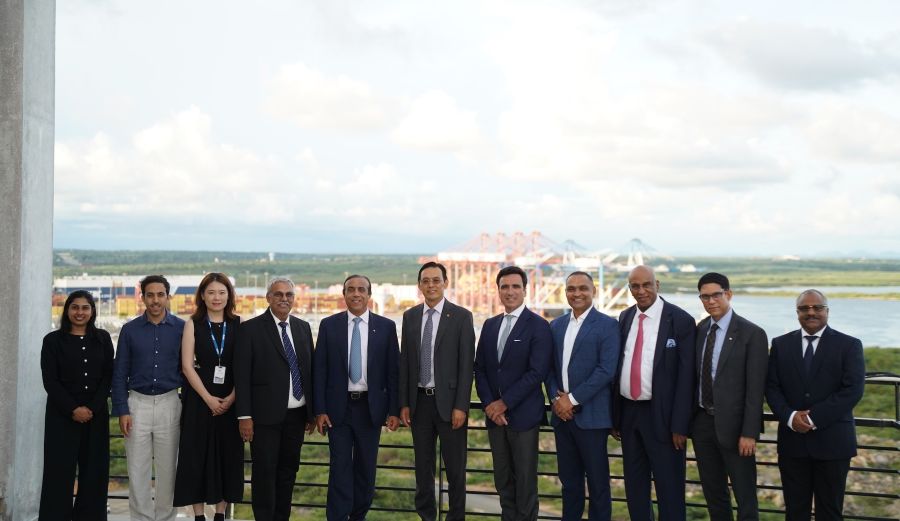
Hambantota International Port Group (HIPG) and Al-Futtaim Logistics are exploring opportunities to expand their existing business relationship, as disruptions to shipping routes in the Middle East highlight Hambantota International Port’s growing importance as an alternative transhipment gateway for vehicles destined for Gulf markets.
The discussions took place during a courtesy visit to Hambantota International Port by a delegation led by the Vice Chairman of Al-Futtaim Group. Key areas of discussion included expanding commercial cooperation and strengthening regional vehicle supply chains through the CASCADIA RoRo Feeder Service. The delegation also expressed interest in investment opportunities at the port, with HIP officials outlining potential opportunities across port operations and its industrial park.
The engagement follows the publication of Al-Futtaim’s white paper, “Resilience in Motion,” which identifies Hambantota as one of three alternative gateways used to maintain regional automotive supply chains following shipping disruptions around the Strait of Hormuz in March 2026. The other gateways were Port Sultan Qaboos in Muscat and Port Khor Fakkan in the Gulf of Oman.
According to the white paper, these three alternative routes collectively facilitated the movement of more than 25,000 finished vehicles into the UAE, Qatar, Bahrain, Kuwait and Saudi Arabia. The arrangements helped maintain dealer supplies and supported automotive manufacturers in restoring full production capacity. The figure represents the combined volume handled through all three routes, not Hambantota alone.
Hambantota’s role in this alternative logistics network demonstrates how strategically located transhipment facilities outside disruption-affected areas can help maintain the flow of vehicles to regional markets. The CASCADIA RoRo Feeder Service, launched on 9 June 2026, is part of this connectivity, supporting onward vehicle movements through Hambantota to Gulf destinations.
The service is operated by CASCADIA, a Canada-headquartered maritime logistics specialist with regional operations in major trade hubs, including Dubai.
Al-Futtaim’s white paper also highlights the importance of contingency planning, shipment visibility and coordination across customs and regulatory systems. It documents how alternative logistics corridors were activated within weeks of the disruption, demonstrating the value of flexible maritime networks and strong regional partnerships.
The discussions between HIPG and Al-Futtaim Logistics therefore carry wider commercial significance, as logistics providers increasingly look to diversify transport corridors, strengthen supply chain resilience and develop alternative gateways capable of responding to geopolitical and operational disruptions.
Al-Futtaim Logistics, part of the Dubai-headquartered Al-Futtaim Group, provides integrated logistics solutions across automotive finished vehicles, aerospace, retail, and food and beverage sectors. Through its strategic network partners, the company has a global reach extending to more than 150 countries.
The renewed engagement could open further opportunities for Hambantota International Port to strengthen its position as a regional automotive transhipment hub while attracting additional logistics and industrial investments.