
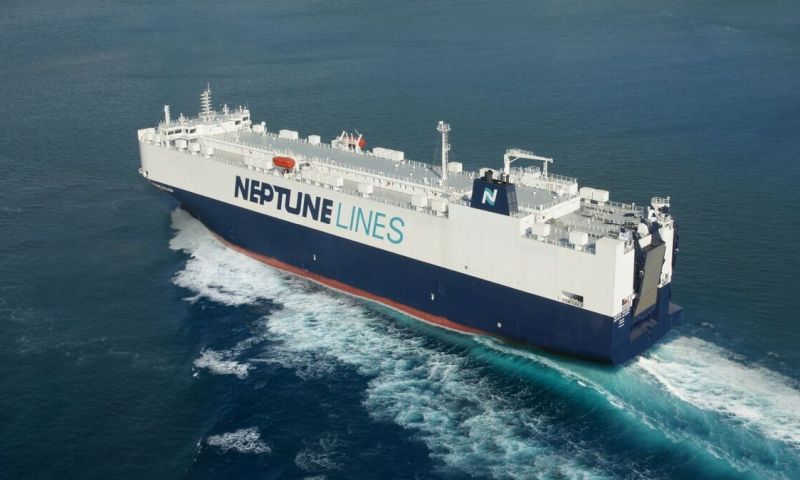
HD Hyundai Marine Solution has inked a deal with Greek operator Neptune Lines Shipping and Managing Enterprises to deliver Engine Part Load Optimization (EPLO) services for four car carriers.
Teaming up with Accelleron, HD Hyundai Marine Solution launched the EPLO service, securing its initial order for one vessel in October of the previous year.
While marine engines are typically designed for optimal fuel efficiency and performance within specific speed and environmental conditions, over 60% of ships worldwide weighing 400 gross tons (GT) or more must comply with the International Maritime Organization’s (IMO) Energy Efficiency Existing Ship Index (EEXI) and Carbon Intensity Indicator (CII) regulations, aimed at reducing greenhouse gas emissions.
“With EPLO, Accelleron is assisting the maritime industry to not only boost the competitiveness of their vessels but also to achieve profitable navigation towards their mid-term decarbonization goals,” explained Matthias Reichmann, global product manager of upgrades at Accelleron.
Consequently, numerous shipping firms are considering engine power restriction measures, opting for reduced speeds and cutting engine output by up to 70%. EPLO is an environmentally friendly solution that enhances combustion efficiency through the alignment of the turbocharger with new load requirements, alongside adjustments to factors like fuel injection volume and timing, and fuel-air mixture ratio. These adaptations have the potential to boost fuel efficiency by as much as 6 grams per kWh, leading to a corresponding reduction in carbon emissions.
“We will contribute to carbon reduction activities in both the shipbuilding and maritime sectors with various eco-friendly solutions that meet market needs,” stated an HD Hyundai Marine Solution spokesperson.