
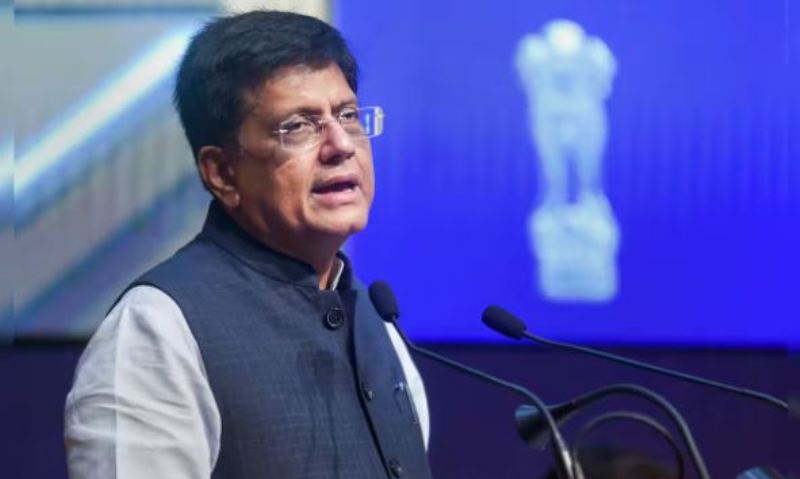
India’s trade deal with Oman is expected to become operational within the next three months, providing duty-free access for a wide range of Indian labour-intensive exports and faster regulatory approvals for pharmaceutical products, Commerce and Industry Minister Piyush Goyal said on December 19.
Addressing a briefing, Goyal said both countries were keen to avoid delays seen in earlier trade agreements. “The Oman-United States trade agreement, signed in 2006, took nearly three years to be implemented. Learning from that experience, India and Oman have decided to operationalise this agreement much faster,” he said, adding “we have also received interest from Oman Diary to have a JV with Amul Diary”.
According to the Commerce Ministry, the Comprehensive Economic Partnership Agreement (CEPA) provides for automatic approvals within 90 days for Indian pharmaceutical products and manufacturing units that are recognised by multiple countries. This is expected to significantly ease market access for Indian drug makers and reduce compliance timelines.
Under the CEPA, Oman has offered zero-duty access on about 98% of its tariff lines, covering nearly 99% of India’s exports to the Gulf nation by value. In FY25, India’s exports to Oman stood at around $4.1 billion, led by refined petroleum products, machinery, metals, aircraft, rice and consumer goods.
While more than 80% of Indian goods already enter Oman at an average tariff of around 5%, some products currently face duties as high as 100%. The removal of these tariffs is expected to improve the price competitiveness of Indian exports, even as officials acknowledge that the scope for a dramatic expansion in trade remains constrained by Oman’s relatively small domestic market.
In exchange, India has agreed to liberalise tariffs on about 78% of its tariff lines, largely through tariff-rate quotas aimed at safeguarding sensitive sectors. India’s imports from Oman were estimated at about $6.6 billion in FY25, dominated by crude oil, liquefied natural gas (LNG), fertilisers and key chemical inputs.
The agreement also contains wide-ranging commitments in services. Oman will open up sectors such as information technology, professional services, education, healthcare and research to Indian companies. A key feature of the pact is the facilitation of temporary entry for Indian professionals into Oman, along with a streamlined approval process for pharmaceuticals.