
India will prioritise maritime security and Artificial Intelligence (AI) as key focus areas in its bid for a non-permanent seat on the United Nations Security Council (UNSC) for the 2028-29 term, India’s Permanent Representative to the UN, Ambassador Harish Parvathaneni, has said.
Speaking at a high-level UNSC debate on emerging technologies and maritime security, Parvathaneni highlighted how advances in AI, autonomous systems, satellite surveillance and cyber capabilities are transforming the maritime sector, creating new opportunities as well as emerging security challenges.
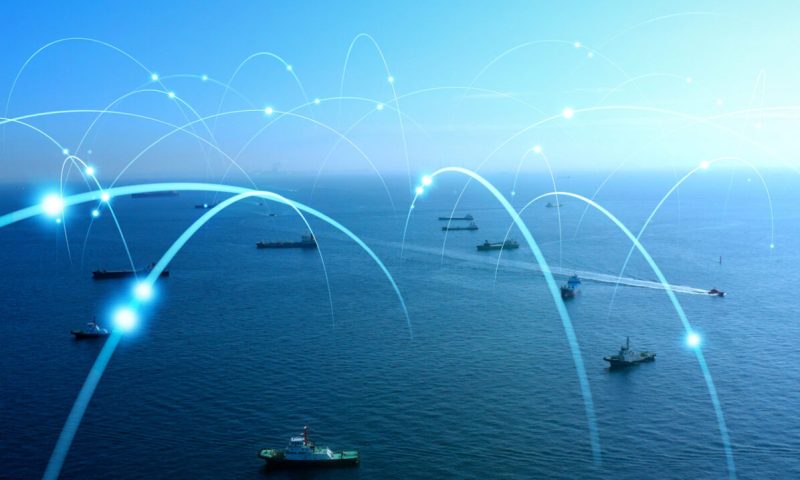
He said AI-powered analysis of satellite imagery, radar, and vessel-tracking data could significantly strengthen maritime domain awareness, identify suspicious activities, and improve search-and-rescue operations.
Highlighting India’s contribution to regional maritime cooperation, he cited the Information Fusion Centre – Indian Ocean Region (IFC-IOR) near New Delhi as an example of effective information sharing and collaboration. The initiative supports India’s SAGAR (Security and Growth for All in the Region) vision.
Parvathaneni stressed the importance of safeguarding freedom of navigation and ensuring the uninterrupted movement of lawful maritime commerce, particularly amid increasing attacks on commercial vessels. He warned that disruptions at critical maritime chokepoints threaten seafarers, disrupt global supply chains and increase trade costs and economic uncertainty, particularly for developing nations.
He also flagged growing cybersecurity risks arising from the digitalisation and automation of ports, vessels, communication networks and undersea infrastructure. The deployment of autonomous maritime systems, he said, raises concerns over accountability, attribution and unintended escalation, requiring appropriate safeguards, meaningful human oversight and clearly defined responsibilities.
India further emphasised that developing countries must have equitable access to emerging technologies, training and institutional capabilities to strengthen maritime security and protect critical infrastructure. Parvathaneni underlined that the UN Charter and international law, including the United Nations Convention on the Law of the Sea (UNCLOS), must remain the foundation for conduct in the maritime domain.
Calling for stronger international coordination, he highlighted the importance of cooperation among institutions such as the International Maritime Organisation (IMO), while cautioning against duplication of their respective mandates.
India has formally announced its candidature for a non-permanent UNSC seat for 2028-29. Elections are scheduled for June 2027, with India competing against Tajikistan for the sole seat allocated to the Asia-Pacific Group.
The focus on AI and maritime security builds on India’s previous engagement at the United Nations. In September, External Affairs Minister S Jaishankar co-chaired an event on AI and international peace and security with Greek Foreign Minister George Gerapetritis during the high-level week of the UN General Assembly. The discussions highlighted AI’s potential to improve maritime domain awareness, search and rescue, disaster response, suspicious activity detection and the resilience of ports and critical infrastructure.