
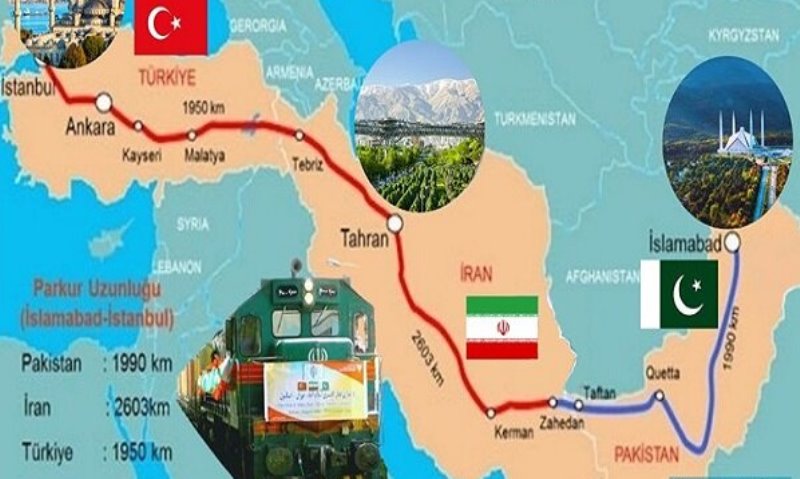
In a significant development possibly impacting the geopolitics of Asia, Iran and Pakistan have announced a strategic railway line which is seen as a step towards controlling India’s interests in the region. With massive strategic implications, Pakistan and Iran have agreed to revive a long-pending railway project connecting Islamabad to Istanbul via Tehran. Here are all the details you need to know about the Islamabad to Istanbul via Tehran rail line and how it will impact India.
Once completed, the historic Islamabad to Istanbul via Tehran 6,540 km railway line will cut travel time between Pakistan and Turkey to just 10 days, which is very less than half the 21 days taken by the sea route. Originally launched in 2009, the project has gained fresh momentum amid growing regional alignments.
India should be cautious because China and Pakistan are intensifying efforts to pull Iran into their strategic orbit, especially around the Chabahar and Gwadar ports. With the China-backed infrastructure expanding near India’s sphere of influence, and talks underway to boost sea trade between Gwadar and Chabahar, the Islamabad to Istanbul via Tehran rail line is being seen as a potential challenge to India’s regional interests.
Nearly two years since the cross-border conflict, Pakistan and Iran on Sunday agreed to set their annual bilateral trade at USD 8 billion, aimed at the advancement of economic cooperation and regional connectivity, media reported.