
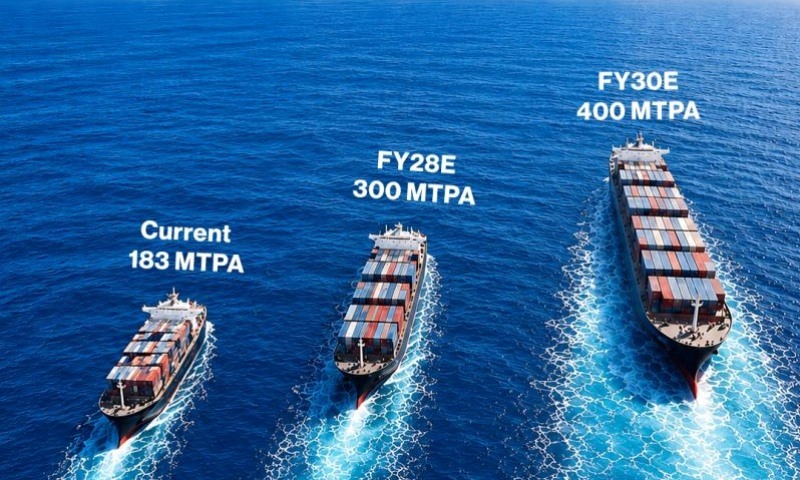
JSW Infrastructure has reaffirmed its ambitious expansion strategy, targeting an increase in cargo-handling capacity from 183 million tonnes per annum (MTPA) to 400 MTPA by FY2030. The growth plan is backed by a combination of greenfield and brownfield port projects, cargo diversification, and enhanced multimodal connectivity.
The company’s expansion roadmap includes capacity enhancements at existing facilities such as Jaigarh, Dharamtar, and Goa, alongside the development of new ports at Jatadhar, Keni, and Murbe. JSW Infrastructure has also strengthened its integrated logistics platform through strategic investments and acquisitions aimed at providing end-to-end supply chain solutions.
With an estimated capital expenditure of around ₹30,000 crore over FY25–FY30, the company is positioning itself to capitalize on India’s growing trade volumes and infrastructure demand. The expansion is expected to support a more diversified cargo mix and increase the share of third-party cargo, further strengthening operational resilience and revenue streams.
JSW Infrastructure said the planned growth will be driven by a balanced mix of port and logistics investments, reinforcing its vision of becoming one of India’s leading integrated ports and logistics operators while continuing to “connect possibilities” across the country’s trade corridors.