
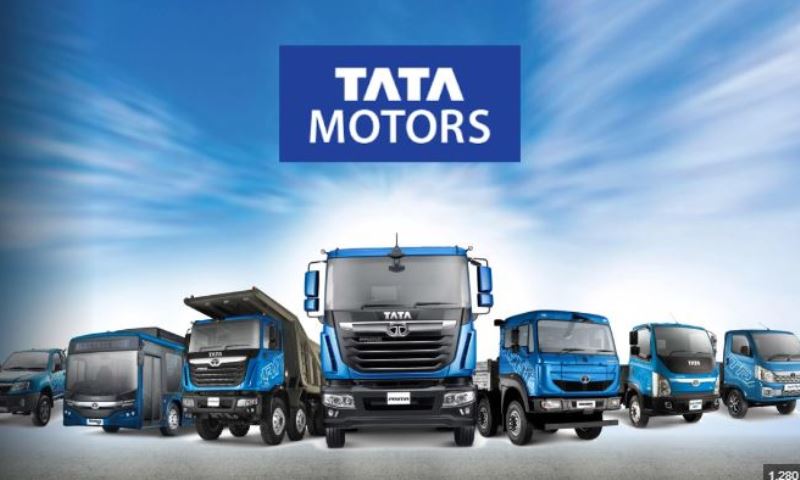
Tata Motors Commercial Vehicles (CV) delivered its strongest-ever financial performance in FY26, reporting record profitability and cash generation while signaling a strategic shift away from pursuing market share at any cost.
Speaking at the company’s first investor day as a standalone commercial vehicle business, Managing Director Girish Wagh said Tata Motors is transitioning from a supply-driven model to a data-led demand-pull framework focused on profitability, cash generation, and recurring revenue streams.
The company reported standalone revenue of ₹77,399 crore in FY26, up from ₹69,000 crore a year earlier, while pre-tax profit before exceptional items climbed to a record ₹8,682 crore. EBITDA margins expanded 140 basis points to 13.2%, and free cash flow surged to ₹9,186 crore, helping boost net cash reserves to ₹7,500 crore from ₹1,600 crore in FY25.
Chief Financial Officer Ramanan GV said the company’s financial architecture is now centered on strong cash conversion and disciplined capital allocation, with annual capital expenditure expected to remain within 2%-4% of revenue.
Despite a decline in overall domestic commercial vehicle market share to 35.7% from 37.1%, Tata Motors emphasized that value-based pricing and margin protection now take precedence over volume growth. Non-cyclical businesses, including aftermarket services and digital platforms, grew 18% and contributed 16% of total revenue in FY26.
The truck business remained a key strength, with heavy commercial vehicle market share reaching a decade-high 55%. Business Head Rajesh Kaul attributed the growth to premiumization, fuel efficiency improvements, and the rollout of advanced vehicle technologies.
The company’s Small Commercial Vehicle (SCV) and pickup segment continued to face challenges, with market share falling to 26.8%. To regain momentum, Tata Motors plans to launch four new SCVs and five new pickup models in FY27, supported by expanded rural dealership coverage.
In passenger mobility, Tata Motors delivered around 55,000 buses during FY26 and entered FY27 with an order book of approximately 6,000 units. Its electric bus fleet expanded to 3,812 vehicles operating across 12 cities under recurring-revenue Gross Cost Contract models.
A major growth pillar highlighted at the investor day was digital logistics. Tata Motors’ Fleet Edge platform crossed one million connected vehicles, while its AI-driven fuel-efficiency solutions have delivered mileage improvements of up to 7% across roughly 40,000 trucks. The company’s integrated mobility platform aims to connect three million vehicles over the next five years through AI-powered logistics and freight management solutions.
Tata Motors also reaffirmed that its planned acquisition of IVECO is expected to close in the second quarter of FY27. The deal is expected to strengthen the company’s global footprint, particularly in Europe and Latin America, while enhancing access to advanced powertrain technologies and reducing reliance on domestic commercial vehicle cycles.
While management expects FY27 to remain challenging due to commodity price volatility, regulatory changes, and freight market uncertainty, Tata Motors believes its strong balance sheet, heavy truck leadership, expanding digital ecosystem, and pending IVECO acquisition position it for long-term growth beyond traditional vehicle sales.