
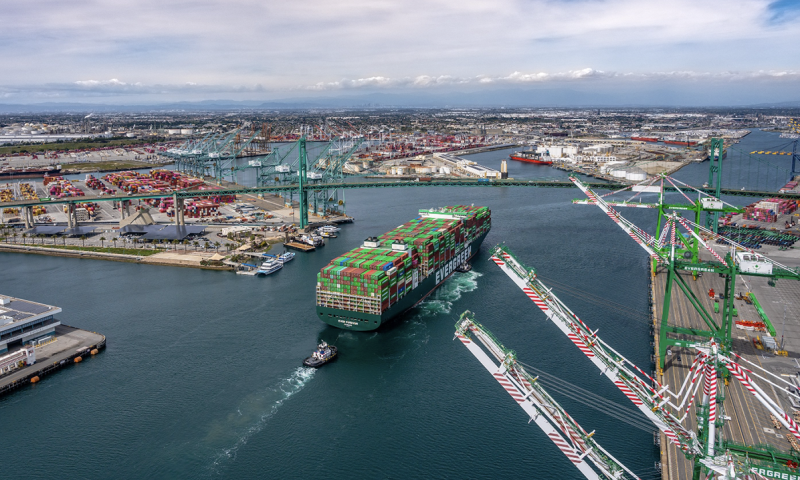
The Port of Los Angeles has approved a new 30-year lease with Yusen Terminals, securing the container terminal operator’s presence at the port through 2056 and paving the way for an additional $200 million investment in zero-emission cargo-handling equipment.
Yusen Terminals has operated at the Port of Los Angeles since 1991, with its facility covering 232 acres at Berths 212-224 along the port’s East Basin Channel. The terminal handles stevedoring, container operations and specialised cargo-handling services.
Under the extended lease, Yusen will invest the additional $200 million in zero-emission equipment over the coming years. The company already operates electric top handlers, forklifts and yard tractors, as well as hydrogen fuel-cell equipment, as part of its transition towards cleaner terminal operations.
The long-term agreement provides Yusen with greater certainty to invest in its terminal, workforce and new technologies while supporting the port’s clean-air objectives. Port of Los Angeles Executive Director Gene Seroka highlighted Yusen’s participation in initiatives aimed at testing and deploying zero-emission equipment.
Yusen Terminals is owned by Ocean Network Express (ONE). The operator is expected to mark its 35th anniversary at the Port of Los Angeles later this year, with the new lease extending the partnership for another three decades.
The agreement strengthens the port’s long-term container-handling capacity while accelerating the shift towards zero-emission cargo operations and cleaner maritime logistics infrastructure.