
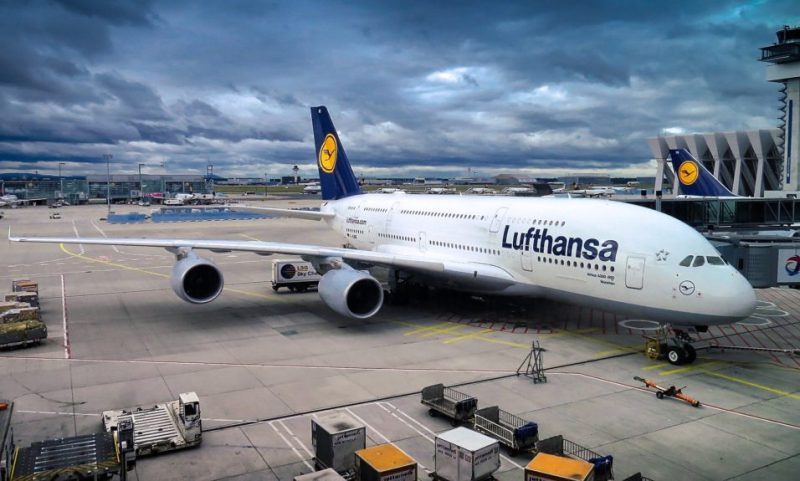
Lufthansa Cargo and Best Services International Freight (BSI) have agreed to reduce the Chinese logistics company’s CO2 emissions associated with airfreight.
“BSI will invest in a total of around 137,000 litres of sustainable aviation fuel (SAF) at Lufthansa Cargo to offset the CO2 emissions caused by its flights. The two companies reached the agreement on June 26 during this year’s transport logistic China logistics trade fair in Shanghai,” says an official release from Lufthansa Cargo.
J. Florian Pfaff, Head, Region Asia Pacific, Lufthansa Cargo says: “Best Services International Freight is our first customer in China to opt for the use of more than 100 tonnes of SAF. Examples like this help reduce our CO2 emissions and promote the use of SAF worldwide. Every customer who takes advantage of this opportunity is making a significant contribution to the decarbonisation of logistics. The interest shows us that there is great potential for this, especially in Asia.”
Wilson Wong, Group CEO, Best Services International Freight adds: “The cooperation with Lufthansa Cargo strengthens our partnership. As China’s leading air cargo logistics company and an industry leader in the digitisation process, we combine progress with responsibility. With limited SAF production globally, agreements like this are of paramount importance.”
The Lufthansa Group aims to achieve a neutral CO2 balance by 2050 and to halve net CO2 emissions by 2030 compared to 2019 through reduction and compensation measures, the release added.