
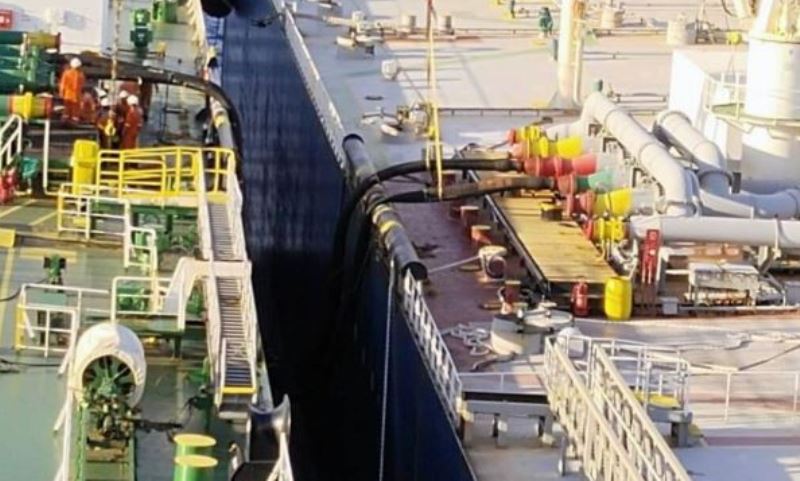
Malaysia has introduced new regulations to combat illegal ship-to-ship (STS) oil transfers in its territorial waters, a move that could disrupt operations of the so-called shadow tanker fleet moving sanctioned oil to China.
Under the new rules, vessels caught conducting unauthorised STS operations will face immediate detention, with the release process expected to take weeks. The Malaysian Maritime Enforcement Agency (MMEA) has been tasked with stricter monitoring across the country’s territorial waters and Exclusive Economic Zone (EEZ).
As part of the crackdown, Malaysia has closed the anchorage and lay-up area at Tompok Utara, located near the eastern entrance of the Singapore Strait. The anchorage, also referred to as the East Outer Port Limits (EOPL), has long been known as a hotspot for offshore STS activity.
In an advisory on yesterday, the Singapore Shipping Association (SSA) confirmed the closure, warning operators that anchoring at Tompok Utara without Malaysian Marine Department (MMD) approval will no longer be permitted.
Malaysian authorities are now requiring vessels to obtain prior approval from the MMD for any operations within national waters. The new enforcement measures include: AIS transponders must remain on and active at all times; vessels must anchor only in officially designated areas within port limits; agents must secure formal approvals from Malaysian port authorities before STS or anchoring activities.
Failure to comply will trigger immediate enforcement, with the MMEA stressing it will act strictly against violators.
Malaysia has, in recent years, emerged as one of the key hubs for clandestine oil transfers, particularly for sanctioned Iranian and Russian crude bound for China.
“If effectively executed, this would positively impact the tanker market by making the non-compliant trade of Iranian oil more difficult, potentially necessitating compliant replacement barrels from other sources,” suggested a shipping markets update from Swedish bank SEB.