
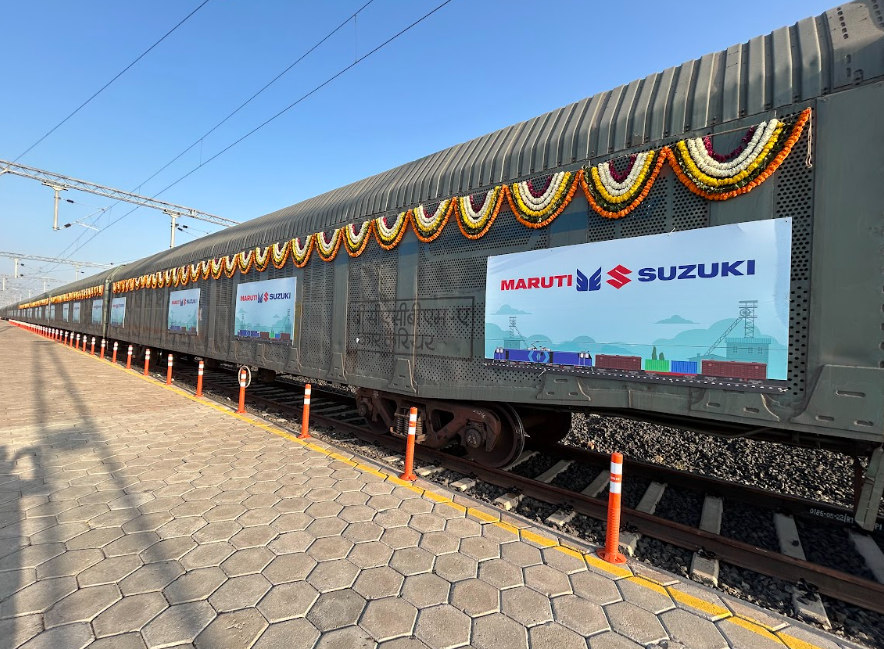
In a bid to reduce the carbon footprint, Maruti Suzuki is transporting more vehicles from its plants through the railway. The automaker transported around 25 percent of its vehicles through the railway in the last financial year.
“We reached the highest ever transportation by railways at about 4.5 lakh cars,” Maruti Suzuki Chairman R C Bhargava said today while speaking to reporters post the 2023-24 earnings announcement.
With the kind of infrastructure development and cooperation with the Indian Railways, Bhargava said the company plans to increase its rail transport steadily and substantially in the future.
Maruti Suzuki’s vehicle transport through the railways is projected to see multifold growth as it has plans to double production capacity from the present 2 million units per annum to 4 million units per annum by 2030-31.
Recently, Prime Minister Narendra Modi inaugurated India’s first automobile in-plant railway siding at Maruti Suzuki’s Gujarat plant. Once fully operational, the railway siding can dispatch 300,000 cars per annum to 15 destinations across India.
Transporting cars through trains instead of trucks will also help the company to reduce cost and time. The company also reportedly has plans to set up similar railway sidings at Manesar and Kharkhoda plants in Haryana.
Meanwhile, Maruti Suzuki currently has an installed solar capacity of 43MWp and eyes to generate more solar power for operations across its facilities. Over 30% of the power requirement is likely to be met through renewable energy this year.
“We are also looking at biogas production that will be in the production processes and electricity generation in Gurgaon and Manesar and we want to make that another big step towards carbon neutrality,” Bhargava said.
“We want to be completely in line with the government’s programs and support the government in helping reach the carbon neutrality targets for 2070,” he added.