
The Odisha government has signed an MoU for the development and operation of two national waterways, an official statement said.
The agreement was signed on Tuesday during the India Maritime-2025 in Mumbai among the Inland Waterways Authority of India (IWAI), the Odisha government, Paradip Port Authority (PPA), and Mahanadi Coalfields Ltd (MCL), it said.
The MoU pertains to the development and operation of the National Waterways-5 and National Waterways-64.
It marks a major step towards harnessing Odisha’s riverine system for sustainable freight movement and regional economic growth, the statement said.
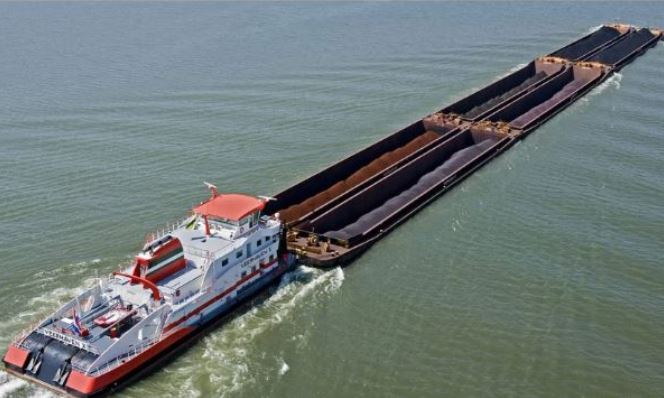
The project, with an estimated investment of ₹12,200 crore, aims to facilitate seamless transportation of coal and other bulk cargo from Talcher coalfields to Paradip and Dhamra ports through inland waterways, it said.
The NW-5 runs through Odisha and parts of West Bengal, connecting the Talcher-Dhamra stretch of river Brahmani, the Matai river, the East Coast Canal, and the Mahanadi delta, while the NW-64 on the Mahanadi stretches from the river mouth at Paradip to Cuttack, officials said.
Apart from helping reduce logistics costs, the project would decongest road and rail networks, and promote environment-friendly transportation, the statement said.
The project will be implemented through a Special Purpose Vehicle – Inland Waterways Consortium of Odisha Ltd (IWCOL).
IWAI will lead the preparation of project proposals, obtain statutory clearances, and develop critical infrastructure, including terminals, barrages, and navigation systems, it said.