
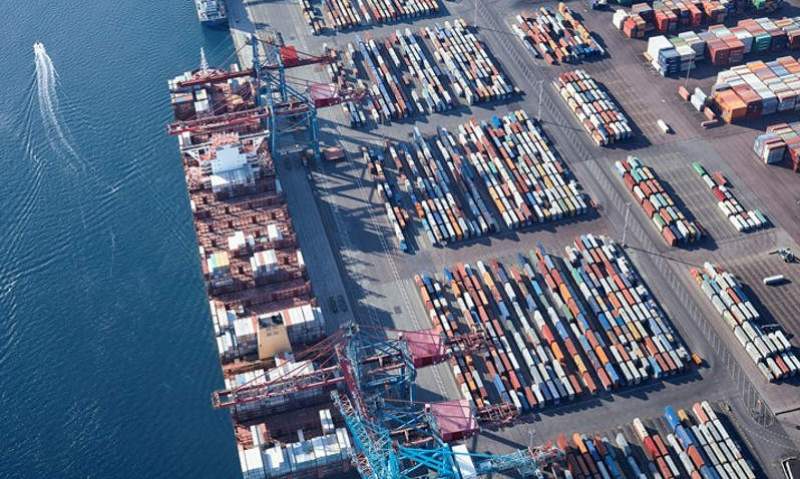
In the first three quarters of 2024, the Port of Gothenburg handled a record-breaking 685,000 TEUs, surpassing last year’s figures by 8,000 units and showing a marginal 1% increase overall, despite a slight drop in the third quarter.
Laden container handling rose by 5%, though a significant decrease in empty container movements impacted total container numbers. Re-balancing import/export levels reduced the need for empty container repositioning, according to the statement by the port authority.
“The ECR reduction at the Port of Gothenburg is a result of the improved balance between imports and exports. We are now on track to return to the near 50-50 ratio that is typical here in Gothenburg, but is quite unique compared to other ports both in Sweden and internationally,” stated Claes Sundmark, Vice President of Sales at the Port of Gothenburg.
Rail transport to and from the Swedish port grew by 7%, fuelled by import-focused rail connections to destinations like Falköping and Nässjö, along with new northern Sweden routes. Rail transport of forest products for export also saw strong growth.
The port’s RoRo volumes dropped 4% amid Europe’s economic slowdown, while car handling declined by 2%, reflecting fewer imports due to a softening Swedish market. Meanwhile, energy product handling jumped 17%, benefiting from expanded biofuel capacity.
Cruise ship calls fell by 20 due to scheduled terminal work, while dry bulk handling climbed 16%, driven by goods like pulp, granules, and gravel.