
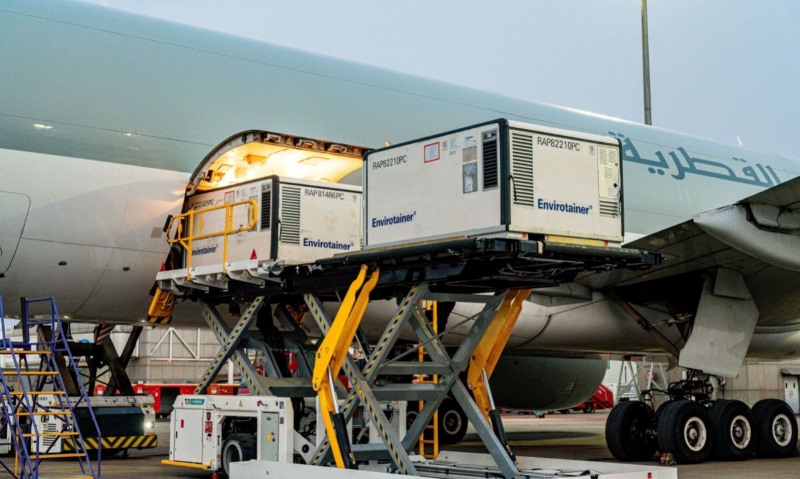
Collaboration with Expeditors, Envirotainer and Adani Airport Holdings supports specialised pharmaceutical air cargo operations
Qatar Airways Cargo has successfully transported highly sensitive pharmaceutical shipments from India to Brazil, using more than 70 temperature-controlled containers aboard two Boeing 777 freighter aircraft.
The operation was carried out in collaboration with Expeditors, Envirotainer and Adani Airport Holdings Ltd, highlighting the importance of coordinated logistics and specialised temperature-controlled handling in transporting critical healthcare products across international markets.
Pharmaceutical shipments require stringent temperature management and careful handling to preserve product quality and integrity throughout the supply chain. The use of temperature-controlled containers enabled the movement of these sensitive consignments across continents, supporting the reliability of pharmaceutical logistics.
The successful operation underscores Qatar Airways Cargo’s commitment to providing specialised air freight solutions for the global healthcare sector. It also demonstrates how collaboration among airlines, logistics providers, temperature-control specialists and airport operators can strengthen international pharmaceutical supply chains and facilitate the movement of essential healthcare products worldwide.