
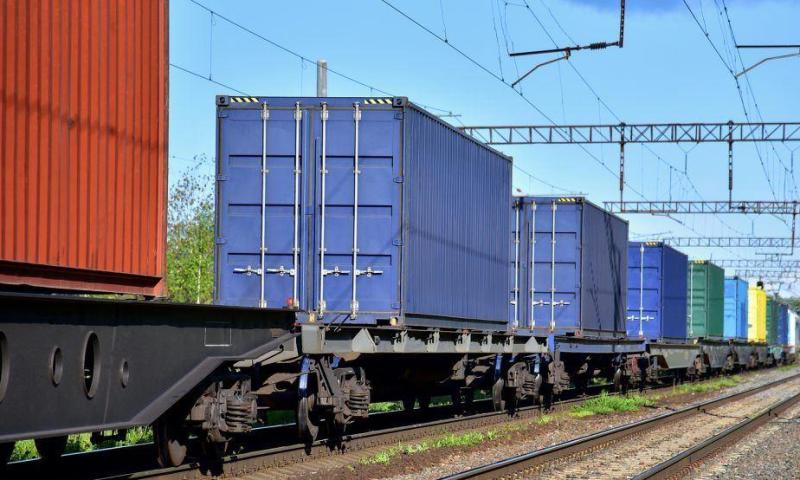
Container rail movement from major ports, including Mundra, Nhava Sheva (JNPA), and Pipavav, declined in the first half of FY25, according to Sanjay Swarup, CMD of Container Corporation of India Ltd (CONCOR). Despite Mundra and Pipavav’s connection to the dedicated freight corridor (DFC), Mundra’s rail coefficient dropped to 23.82% from 25.79% year-on-year, while Pipavav saw a larger decrease from 64.55% to 57.42%.
Jawaharlal Nehru Port Authority (JNPA) is slated to connect to the Western DFC by December 2025, with double-stack container trains set to begin by month-end for northern India via Varnama, 400 km from JNPA. This double-stacking is expected to divert traffic from road to rail, potentially increasing the rail coefficient at JNPA, which currently stands at around 16%.
Despite the overall rail coefficient decline, CONCOR increased its double-stack container train operations by 11.5% in H1 FY25 and grew its market share at Mundra to 38.83% and at Pipavav to 47.89%, citing improved customer relationships and operational efficiency.