
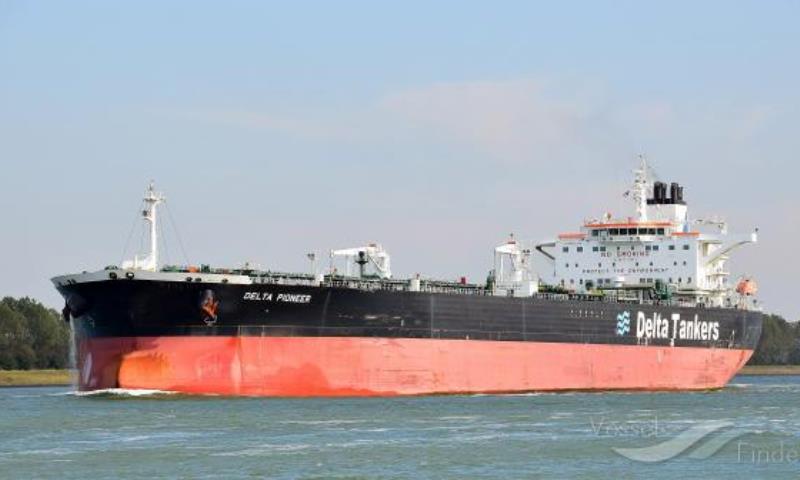
A U.S.-sanctioned Aframax tanker carrying Iranian crude has abruptly changed course from India to China, highlighting the fragile dynamics of global oil trade amid sanctions and payment uncertainties.
The vessel, Ping Shun, which had been signalling Vadinar as its destination earlier this week, is now indicating Dongying in China, according to ship-tracking firm Kpler. The tanker is estimated to be carrying around 600,000 barrels of crude loaded from Kharg Island in early March.
According to Sumit Ritolia of Kpler, the vessel dropped India as its declared destination near arrival after signalling Vadinar for several days. While mid-voyage destination changes are not uncommon in Iranian crude trades, the shift is being linked to tightening payment terms and increased counterparty risk.
The cargo would have marked India’s first import of Iranian crude since 2019, following a recent 30-day U.S. sanctions waiver aimed at easing global oil prices. That window is set to expire on April 19.
However, payment mechanisms remain a major hurdle. Iran’s continued exclusion from the SWIFT system has complicated transaction channels, forcing buyers and sellers to rely on alternative arrangements. Earlier frameworks—such as euro-denominated payments routed through intermediary banks—are no longer viable.
Vadinar hosts a 20 million tonnes per annum refinery operated by Nayara Energy, which has historically processed Iranian light and heavy crude grades due to favorable compatibility and pricing.
India was once a major buyer of Iranian oil, importing up to 518,000 barrels per day in 2018, before U.S. sanctions led to a complete halt in purchases by May 2019. At its peak, Iranian crude accounted for 11.5% of India’s total imports.
Industry estimates suggest around 95 million barrels of Iranian oil are currently stored on tankers at sea, with nearly half potentially suitable for Indian refiners. However, the Ping Shun episode underscores that beyond logistics, evolving commercial terms—particularly payment conditions—are now critical in determining trade flows.
While the cargo could still be redirected to India if financial issues are resolved, its diversion to China reflects the continued dominance of Chinese buyers in absorbing sanctioned Iranian barrels.