
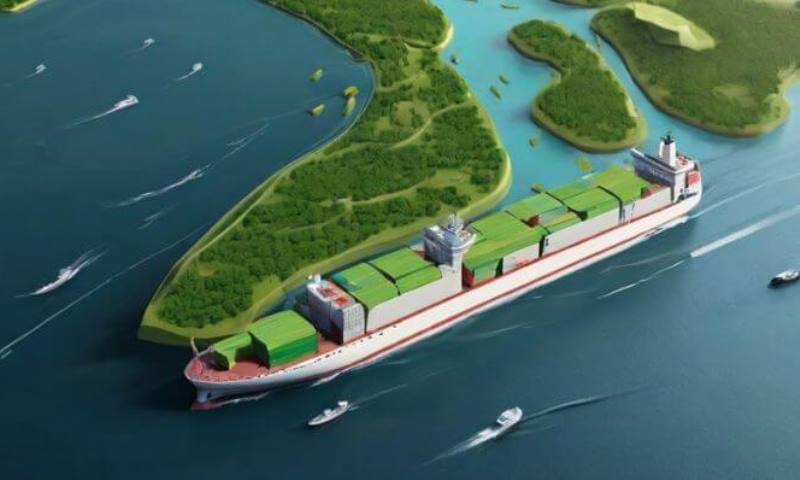
The Shanghai–Melbourne Green Shipping Corridor has entered its implementation phase, with partners targeting the deployment of one or more container vessels powered by non-fossil-based low-carbon fuels on the route by 2035.
Announced on October 21, 2026, the implementation plan brings together port authorities, industry partners and C40 Cities to advance alternative-fuel supply, bunkering infrastructure, shore power and digital cooperation along the China–Australia maritime trade route.
Green methanol, biofuels and other non-fossil-based low-carbon fuels are among the options being considered. Shanghai aims to develop annual bunkering capacity of one million tonnes for green methanol and biofuels, while Melbourne will assess the feasibility of infrastructure for alternative-fuel bunkering.
The initiative involves Shanghai International Port (Group) Co., Ltd., COSCO SHIPPING Lines (North America) Inc., HAMR Energy, ABEL Energy and SHENERGY. The partners aim to improve coordination between fuel producers, suppliers and shipping lines to align fuel availability with future vessel demand. However, the proposed capacity target does not represent confirmed fuel purchases or sales.
The implementation plan also includes assessing the feasibility of shore power at the Port of Melbourne and exploring greater integration between port and vessel data systems. Voyage optimisation and interoperable digital tools are expected to support operational efficiency and reduce emissions across the maritime supply chain.
The corridor builds on an agreement established on October 19, 2025, between the Port of Melbourne and the Shanghai Municipal Transportation Commission, with support from C40 Cities. The latest plan advances the partnership towards feasibility studies, infrastructure planning and commercial coordination.
Melbourne and Shanghai have maintained a sister-port relationship since 2006. China is Melbourne’s largest trading partner, accounting for approximately half of its container imports and one-fifth of its container exports. These figures relate to trade with China as a whole, rather than exclusively to cargo moving between Melbourne and Shanghai.
The next phase will focus on completing feasibility assessments, identifying infrastructure requirements and securing commercial commitments. No specific vessel, deployment date or dedicated operating schedule has yet been confirmed, with the partners targeting initial low-carbon vessel deployment by 2035.