
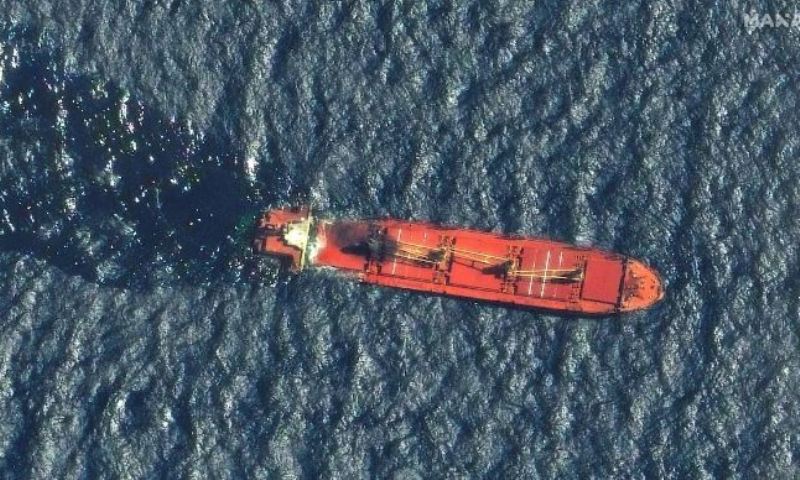
Shipping companies are increasingly seeking assurances from Yemen’s Houthi rebels before sending vessels through the Red Sea, highlighting the growing security challenges facing commercial shipping in one of the world’s most important maritime trade corridors.
According to a report by The Wall Street Journal, some shipping operators have been contacting the Houthis through the Humanitarian Operations Coordination Center (HOCC), an organisation established by the group in 2024 to communicate its maritime restrictions to the shipping industry.
The informal arrangement has no recognised legal authority and does not give the Houthis any legitimate right to regulate vessel movements through international waters. However, the development reflects the difficult security environment confronting shipowners and operators navigating the region.
The move follows the Houthis’ announcement in July 2026 of a maritime blockade against Saudi Arabia, warning that vessels linked to Saudi ports or carrying Saudi cargo could face attacks. The threat has further heightened concerns over vessel safety in the Red Sea and the adjoining Gulf of Aden.
Chinese Vessel Seeks Houthi Assurances
One example highlighted in the report involved the Chinese container vessel Zhong Cheng Chang Ling. In September, its ship-management company reportedly contacted the Houthis and received assurances that the vessel was not considered a target.
The ship subsequently crossed the Red Sea and the Bab el-Mandeb Strait, entering the Indian Ocean on September 11. Its captain reportedly said the company had instructed him to make contact as a precaution.
Shipping Routes Under Pressure
The Red Sea crisis, which intensified following the outbreak of the Israel-Hamas war, has forced several major shipping companies to divert vessels around the Cape of Good Hope in southern Africa.
Although the alternative route significantly increases sailing distances, transit times, fuel consumption and operating costs, many operators consider it a safer option than risking attacks involving missiles and drones.
The Bab el-Mandeb Strait, connecting the Red Sea with the Gulf of Aden, is a critical gateway for international trade and access to the Suez Canal. Disruptions in the region have significant implications for container shipping, energy transportation and global supply chains.
International Concerns Over Direct Engagement
International maritime authorities have cautioned shipping companies against engaging with or registering vessels through the Houthi-established system, citing potential legal and security implications.
The United States has also designated the Houthis as a Foreign Terrorist Organization.
The willingness of some shipping operators to seek assurances from the group underscores the extent to which security risks have complicated commercial shipping decisions in the region.
With threats to vessels continuing and uncertainty surrounding maritime access, the Red Sea remains a major concern for the global shipping industry. The latest developments highlight how geopolitical tensions are increasingly influencing vessel deployment, route selection and operational risk management across international shipping networks.